More than one golfer has carded a hole-in-one at Pebble Beach, but some aces echo an eternity. These moments are more than just blind luck, they're the ultimate payoff for precision, preparation, and nerve under pressure. This article covers the most iconic holes-in-one at Pebble Beach, discusses how you can approach these famous par-3s yourself, and shares what we can all learn from these legendary shots.
The best AI golf app: Caddie is your personal AI golf coach. Get expert-level golf advice instantly, 24/7 to help you play like a pro. Try it free →
The Most Legendary Aces in Pebble Beach History
Pebble Beach Golf Links is the stage for some of golf's most memorable moments, particularly during the AT&T Pebble Beach Pro-Am and the U.S. Open. While hundreds of aces have been recorded, a select few are etched into the memory of every golf fan for their drama and significance.
The Shot Seen 'Round the World: Jack Nicklaus, 1972 U.S. Open, 7th Hole
If you ask which golfer hit a hole-in-one at Pebble Beach, Jack Nicklaus's name is the first that should come to mind. But his ace wasn't exactly an ace - and that’s what makes it so fascinating. On the final day of the 1972 U.S. Open, with a fierce wind howling off the Pacific, Nicklaus stood on the tee of the tiny, treacherous 7th hole. He was clinging to a lead, and this "short" hole was threatening to derail his championship hopes.
The hole was playing about 109 yards, but the crosswind was absolutely ripping. After some deliberation, Nicklaus pulled a 1-iron. He wasn't trying to make a hole-in-one, he was simply trying to find the green. He hit a low, controlled stinger that bored through the wind, took one hop, slammed against the flagstick, and dropped down to within inches of the cup. For years, many believed it was an ace, but Nicklaus himself confirmed it was a tap-in birdie. Regardless, it was the shot that effectively clinched the U.S. Open and became one of the most clutch golf shots ever hit.
The King of the 7th: Tom Watson
While Nicklaus has the most famous shot on 7, Tom Watson has a special relationship with the hole. He has a legitimate claim to fame, having aced the picturesque par-3, not once, but twice during competition at the AT&T Pebble Beach Pro-Am. His familiarity and mastery of the Monterey Peninsula's conditions gave him a unique advantage, and making two holes-in-one on arguably the most recognized par-3 in America cements his status as a Pebble Beach legend.
Modern Marvels: Viktor Hovland and Séamus Power
The tradition of incredible shots at Pebble continues today. In the final round of the 2024 AT&T Pebble Beach Pro-Am, Viktor Hovland made a brilliant ace on the par-3 12th hole, a solid 200-yard shot that landed perfectly and rolled straight into the cup. It was a moment of pure class from one of the game's best ball-strikers.
Just two years prior, in 2022, Irish golfer Séamus Power had his moment in the sun, carding a hole-in-one on the demanding 17th hole during the same tournament. These recent moments prove that even with modern technology, conquering Pebble's par-3s remains a monumental achievement that gets the golf world talking.
Get pro-level golf advice instantly, 24/7
Ask Caddie anything. From “what club should I use?” to “how do I play this shot?” and get instant answers.
It's one thing to watch the pros do it on TV, but what happens when you’re the one standing on the tee? As a coach, I believe an amateur golfer’s goal should be "smart survival" on these holes. Forget the ace, let's talk about making a confident par.
How to Play the 7th Hole (The Downhill Beauty)
The Real Opponent is the wind: The yardage is almost irrelevant. Your singular focus should be on the wind. Is it in your face? Is it coming from the side? Don't just feel it on the tee. Look at the flagstick on the green. Look at the waves in Carmel Bay behind it. Throw a blade or two of grass and see how it behaves. The difference between a pitching wedge and an 8-iron can depend entirely on that moving air.
Take Less Club and Swing Easy: Most amateurs see the trouble and try to muscle the ball there. Huge mistake. Because the hole plays steeply downhill, your ball will spend more time in the air, giving the wind more time to affect it. Your best bet is to take one club less than you think, make a smooth, balanced, 80% swing, and focus on pure contact. A controlled shot flight is your best friend here.
The Smart Target: You are not pin-hunting. Your target is the dead center of the green. Let the contours do the rest. A shot that finds the middle of the putting surface gives you a legitimate shot at birdie and almost guarantees you won't be reloading from the drop zone.
How to Play the 17th Hole (The Hourglass Challenge)
This long par-3, famous for Watson's chip-in in '82, is a brute. Its awkwardly shaped "hourglass" green requires strategic thinking.
Avoid the "Sucker Pin": The traditional final-round pin placement is back-left, tucked right behind a deep, frightening bunker. This is the ultimate sucker pin. Amateurs see it and think, "I can get it there." The pro - and the smart amateur - sees it and aims 20 feet right of it.
Club Up for Safety: There is almost no trouble long on this hole, but being short is jail. A ball that doesn't carry the bunkers in front leaves you with a nearly impossible up-and-down. Take enough club to be absolutely sure you are flying to the back half of the green. Your miss should be long or right, never short.
Play for a Par: Approach the 17th with a "par is a birdie" mindset. Your goal is to hit the wide, right-center part of the green. If you do that, you'll have two putts for your par and you'll walk to the 18th tee feeling like a genius. Let your playing partners be the ones to get greedy and rack up a double bogey. Course management is about making smarter decisions than the next person.
Plan every shot like a pro
Describe your situation and Caddie AI helps you pick your target, shot shape, and club with confidence.
Hitting a hole-in-one is certainly lucky, but the shots hit by players like Nicklaus and Hovland weren't total flukes. They were the result of a process that every golfer can learn from to hit better shots, whether you’re at Pebble Beach or your local muni.
1. Total Commitment to Your Decision
When Jack Nicklaus decided on a 1-iron, he didn't half-heartedly try to guide it. He committed to the shot entirely. Indecision is the enemy of a good golf swing. When you're standing over the ball, waffling between a 6-iron and a 7-iron, you've already lost. The first step to a great shot is making a clear decision on your club and your target, and then trusting that decision without a doubt. Pick your club, see the shot in your mind, and let it go.
2. Play the Course, Not Just the Ball
An average golfer sees a target 150 yards away. A great player sees the wind pushing left-to-right, the uphill slope adding 5 yards, and the firmness of the green. Before you even pull a club, take 10 seconds to really read the environment. What is the wind doing? Where is the real trouble? What is the smartest miss? Answering these questions turns a simple golf shot into a strategic puzzle that you can solve.
3. Produce a Balanced, Rhythmic Swing
Look at any classic swing from a legend. It’s not a violent, lashing motion. It’s balanced. It’s driven by the rotation of the body, not a frantic flail of the arms. The swing is a rounded action where you turn your torso back, and then simply unwind your body to deliver the club to the ball. The most powerful and consistent shots come from this feeling of a controlled turn and unwind, where you finish in perfect balance, watching the ball fly toward your target. You don't have to swing out of your shoes to hit it pure.
Play Golf like a Pro with Caddie
Learn and improve your golf game as you play. Get pro-level tips, strategy and guidance anytime.
Hitting a hole-in-one at Pebble Beach, a feat accomplished by legends like Jack Nicklaus and Tom Watson, boils down to three core principles: complete commitment to a smart decision, a deep understanding of the course's conditions, and executing a balanced, controlled swing under pressure. It's the ultimate blend of skill, strategy, and mental fortitude.
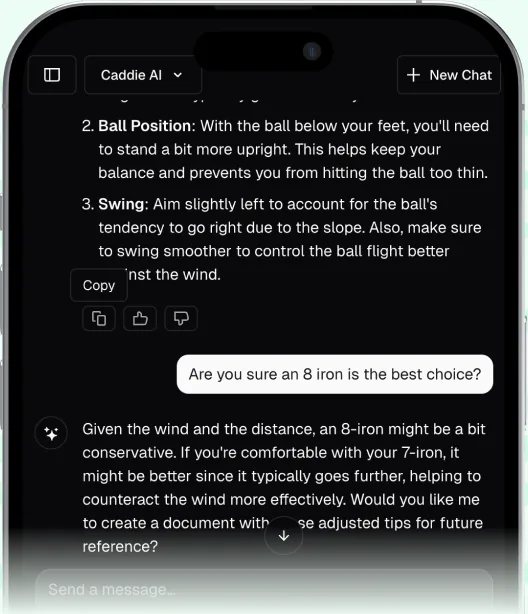
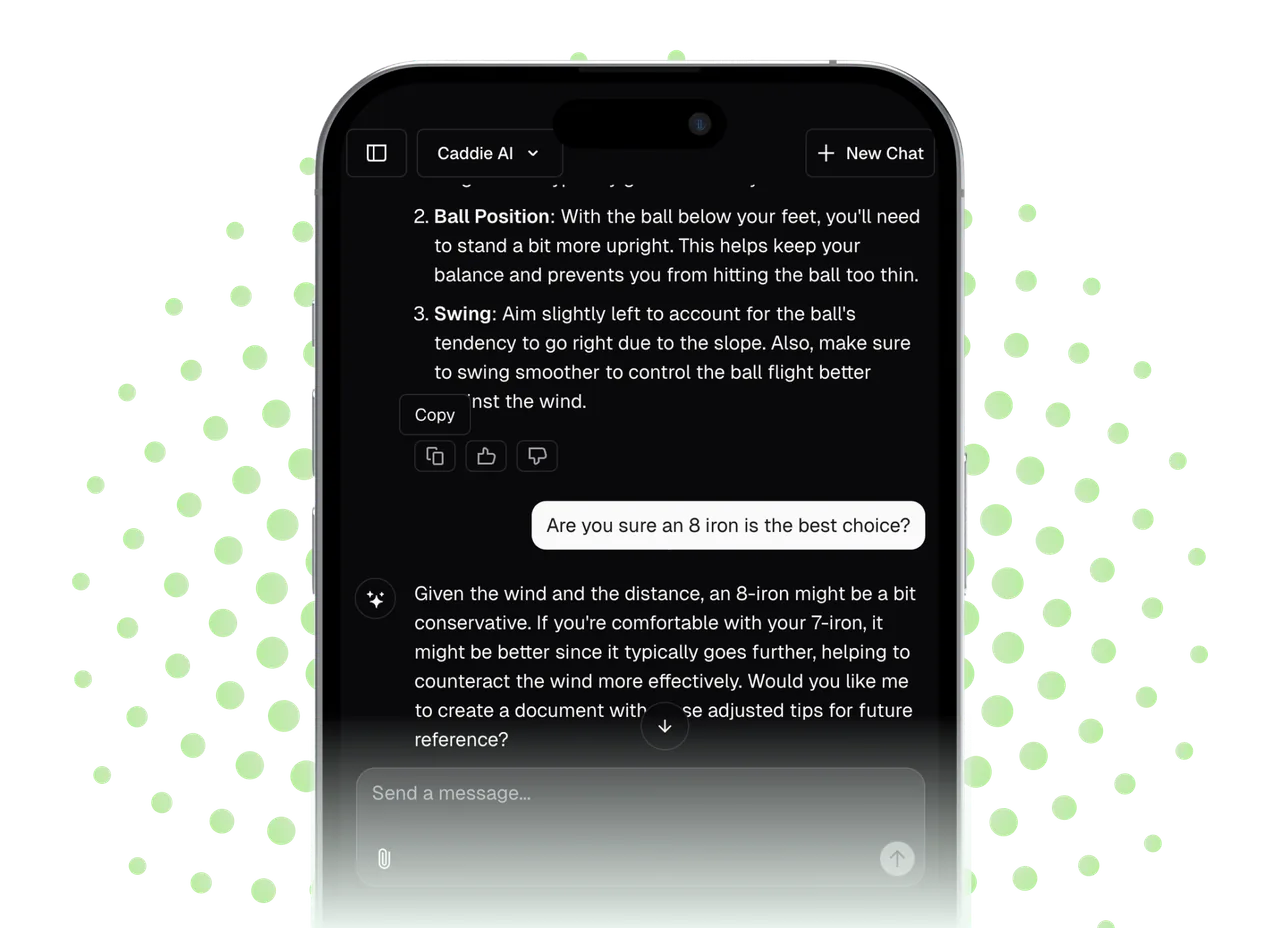
At the end of the day, gaining that pro-level confidence comes from eliminating guesswork. That’s why we created Caddie AI. Our app is designed to give you that same strategic clarity right in your pocket. Whether you need a smart game plan for a tricky hole like Pebble's 7th, or you’re stuck with a bizarre lie and need instant advice (you can even snap a photo), our AI serves as your personal caddie, helping you make smarter, more confident decisions so you can focus on simply enjoying the game and hitting better shots.
Spencer has been playing golf since he was a kid and has spent a lifetime chasing improvement. With over a decade of experience building successful tech products, he combined his love for golf and startups to create Caddie AI - the world's best AI golf app. Giving everyone an expert level coach in your pocket, available 24/7. Caddie's mission is simple: make world-class golf advice accessible to everyone, anytime.
Other posts you might like
What Is Tiger Woods' Current Status in Professional Golf?
Almost every golf fan asks the same question these days: What is Tiger Woods' current status in professional golf? The simple answer is that he is an active, albeit part-time, professional golfer. This article will break down exactly what that means for his health, his tournament schedule, what's in his bag, and his goals for this final chapter of his unbelievable career.
Finding a sleeve of premium golf balls for a bargain price, only to see C Grade on the label, can leave you wondering if you've found a hidden gem or fool's gold. These balls are significantly cheaper, but what’s the catch? This guide will break down exactly what C Grade golf balls are, what you can expect from their performance, and most importantly, help you decide if they're the right choice for your game.
Hearing a golfer say their irons are 1 degree up might sound like minor technical jargon, but it's a detail that can dramatically change where your ball goes. Understanding this one simple adjustment unlocks a major secret to shot consistency and accuracy. This article will show you exactly what 1 degree up means, how it affects your ball flight, and how to figure out if it’s the right adjustment for your game.
Finding the right golf clubs for a young player is one of the most important first steps you can take to help them enjoy the game. Forget trying to cut down your old clubs - giving them equipment built specifically for their size and strength is the foundation for a good swing and, more importantly, a good time. This guide will walk you through exactly what to look for, how to measure your child for the right fit, and which brands provide the best options for golfers of every age and skill level.
Ever heard a golf announcer describe a course as having that classic Sandbelt feel? It’s a term of reverence, spoken with a knowing nod to a specific, and frankly, incredible, style of golf. This article will break down exactly what defines a Sandbelt golf course, from its signature artistic bunkering to the chess-like strategy it demands, and give you practical tips to conquer this style of architecture no matter where you play.
A golf tour is a traveling circus of competition, an organized series of tournaments where players compete for prize money, rankings, and a spot at the next level. This article will break down exactly how these tours work, from the biggest stages like the PGA TOUR to the amateur and junior circuits where the next generation of stars is born. We'll also map out the demanding path a player must take to earn a spot an elite professional tour.