Seeing the name Jack Nicklaus on a scorecard is enough to get any golfer’s attention, but the phrase Signature Golf Course suggests something more. It implies a deeper level of quality and a personal touch from the Golden Bear himself. This article will break down what that elite designation truly means, explore the specific design philosophy behind these legendary layouts, and give you practical, coach-approved strategies for tackling one.
The best AI golf app: Caddie is your personal AI golf coach. Get expert-level golf advice instantly, 24/7 to help you play like a pro. Try it free →
So, What Exactly Is a Nicklaus Signature Golf Course?
In simple terms, a Jack Nicklaus Signature Golf Course is the pinnacle of the Nicklaus Design portfolio. It means that Jack Nicklaus himself was intimately involved in every stage of the course’s development, from the initial site walk to the final placement of the flagsticks. This is a critical distinction that separates "Signature" courses from others worked on by his world-renowned firm, Nicklaus Design.
Nicklaus Design has created over 425 courses in 45 countries, but only a fraction of those are official "Signature" courses. Here’s a look at what that hands-on process involves:
Initial Site Evaluation: It starts with Jack walking the raw, untouched land. He's not looking at a map, he's feeling the contours, studying the native vegetation, and seeing how the sunlight moves across the property. He famously lets the land dictate the flow of the course, rather than forcing a pre-conceived layout onto it.
Routing the Holes: Jack himself draws the routing plan. This is where he sequences the holes, creating a rhythm for the round - a mix of long and short holes, different directions, and varied challenges. This is more of an art than a science, and it’s where his brilliant strategic mind as a player truly comes to life.
On-Site Supervision: This is the key difference. For a course to earn the “Signature” title, Jack makes multiple site visits throughout construction. He's there shaping fairways, positioning bunkers, and meticulously sculpting green complexes alongside the construction crew. He's known for sitting on a bulldozer, directing the team to move a few feet here or there to get a bunker edge just right.
Think of it like this: anyone at a great architectural firm can design a building based on the lead architect's principles. But a "Signature" building is one where that master architect personally oversaw the project, ensuring their unique vision was perfectly executed. The same applies here. A Signature Course is a direct reflection of Jack’s personal philosophy and unparalleled experience in the game.
Get pro-level golf advice instantly, 24/7
Ask Caddie anything. From “what club should I use?” to “how do I play this shot?” and get instant answers.
Playing a Nicklaus Signature Course is like having a strategic conversation with the man himself. He presents you with questions and challenges on every hole. As a golf coach, I help players recognize these patterns. Understanding his M.O. is the first step to playing these courses well.
Heroic Risk-Reward Opportunities
Jack loves to tempt you. The core of his design philosophy is "heroic" risk-reward golf. On almost every hole, especially par 5s and short par 4s, he offers two distinct paths:
The Safe Route: A generous landing area that takes major trouble out of play but leaves a more challenging or longer approach shot.
The Heroic Route: A bolder line that requires flying a collection of bunkers, a water hazard, or a canyon. The reward? A much shorter approach, a better angle to the flag, or even a chance to get on the green in two.
The famous 18th hole at Muirfield Village Golf Club is a perfect example. A creek runs down the entire left side of this long par 4. The safe play is to aim well right, leaving a long-iron shot to a treacherous green. The heroic play is to challenge that water and hit a fade off the tee, which shortens the hole considerably. Jack constantly presents you with that choice: are you feeling bold?
A Nod to the Power Fade
It’s no secret that Jack’s preferred shot shape was a high, powerful fade (a left-to-right ball flight for right-handed players). You’ll often see this bias in his designs. Many of his par 4s and par 5s set up beautifully for a player who can move the ball from left to right off the tee. This doesn’t mean slicers have an advantage! It means a controlled fade often finds the widest part of the fairway and opens up the best angle into the green.
If you don’t hit a fade, don't worry. This tendency simply informs your strategy. Knowing that, a draw hitter might choose a different club off the tee to ensure they stay in play. It’s part of the chess match.
Approach Shots that Demand Precision
Jack believes the ultimate test of a great golfer is the second shot. He often designs greens that are his last line of defense. You’ll frequently encounter:
Smaller, Undulating Greens: You won’t find many huge, flat surfaces. His greens often have multiple tiers, subtle ridges, or significant slopes that make lag putting very difficult.
Well-Guarded Complexes: Jack strategically uses deep bunkers, swales, and water hazards to protect his greens. More often than not, there’s a "safe side" and a "trouble side." He forces you to think about where to miss. A missed green on the correct side might leave a simple chip, while a miss on the other side could lead to a double bogey.
Playability for Everyone
Despite their reputation for being challenging, a core tenet of Nicklaus design is fairness and playability. Jack knows that the majority of golfers aren’t scratch players. For that reason, his Signature Courses almost always feature five or more sets of tee boxes.
From the back tees, the course is a monster designed to test the world's best. But from the forward tees, the forced carries are often minimized, fairways become wider, and the game feels completely different. He designs his courses so an 18-handicapper can have just as much fun (and find it just as fair) as a tour professional, provided they choose the right tee box.
Plan every shot like a pro
Describe your situation and Caddie AI helps you pick your target, shot shape, and club with confidence.
How to Strategically Play a Nicklaus Signature Course
Alright, you’ve booked your trip. You're about to step onto a course shaped by the greatest of all time. How do you approach it? As a coach, I tell my students to forget about just hitting the ball and start thinking the game.
1. Swallow Your Pride, Play the Right Tees
This is the most important piece of advice I can give you. Don’t look at the total yardage on the scorecard. Walk up to the first par 3 and the first par 4 on the tees you think you should play. Can you comfortably reach the green on the par 3 with a mid-iron? Can you hit a decent drive on the par 4 and have a reasonable club into the green? If not, move forward one tee box. You will have exponentially more fun playing the course as Jack intended for your skill level, rather than spending all day hacking out of trouble because the forced carries are too long.
2. Master the "Work-Back" Strategy
Don't just hit your driver as far as you can. On a Nicklaus course, you need to think from the green backwards.
Look at the pin location. Is it tucked behind a bunker? Protected by water?
Decide on your ideal approach shot. "To get to that back-left pin, the best angle of attack is from the right side of the fairway. I want to leave myself about 150 yards."
Plan your tee shot accordingly. "Okay, so I will aim my 3-wood down the right side of the fairway, which should leave me around 150 yards out."
This simple process instantly turns you from a purely reactionary golfer into a strategist. You're now playing Nicklaus's game.
3. Be Honest About Risk-Reward Decisions
When you encounter one of those heroic shots, run through a quick, honest checklist before pulling the trigger:
What is the real reward? Will it just save me 20 yards, or will it give me a look at eagle?
What happens if I fail? Is a penalty stroke guaranteed, or will I just be in a fairway bunker?
How am I playing today? If you’ve been striping your driver, maybe go for it. If you’re struggling, it’s probably a good day to take the conservative route.
A smart layup is a weapon. Too many amateurs see it as a surrender. On a Nicklaus course, it is often the shot that saves your scorecard from disaster.
4. Aim for the Fat Part of the Green
Given the heavily guarded and tiered greens, "pin-seeking" is a fool’s errand for most golfers. Jack wants you to hit the green, but he rewards you for hitting it in the right spot. Your default mindset should be to aim for the center of the green, regardless of where the pin is. You will be amazed at how many two-putt pars you rack up while your playing partners are short-sided in deep bunkers after going for a sucker pin.
Play Golf like a Pro with Caddie
Learn and improve your golf game as you play. Get pro-level tips, strategy and guidance anytime.
A Jack Nicklaus Signature Golf Course represents a personal stamp of approval from the greatest champion the sport has ever known. It’s a layout designed with intention, offering a strategic test that honors the surrounding landscape and challenges every aspect of your game in a fair and memorable way.
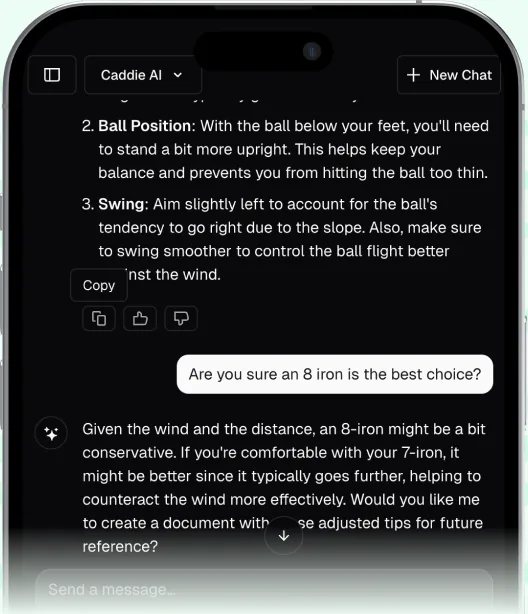
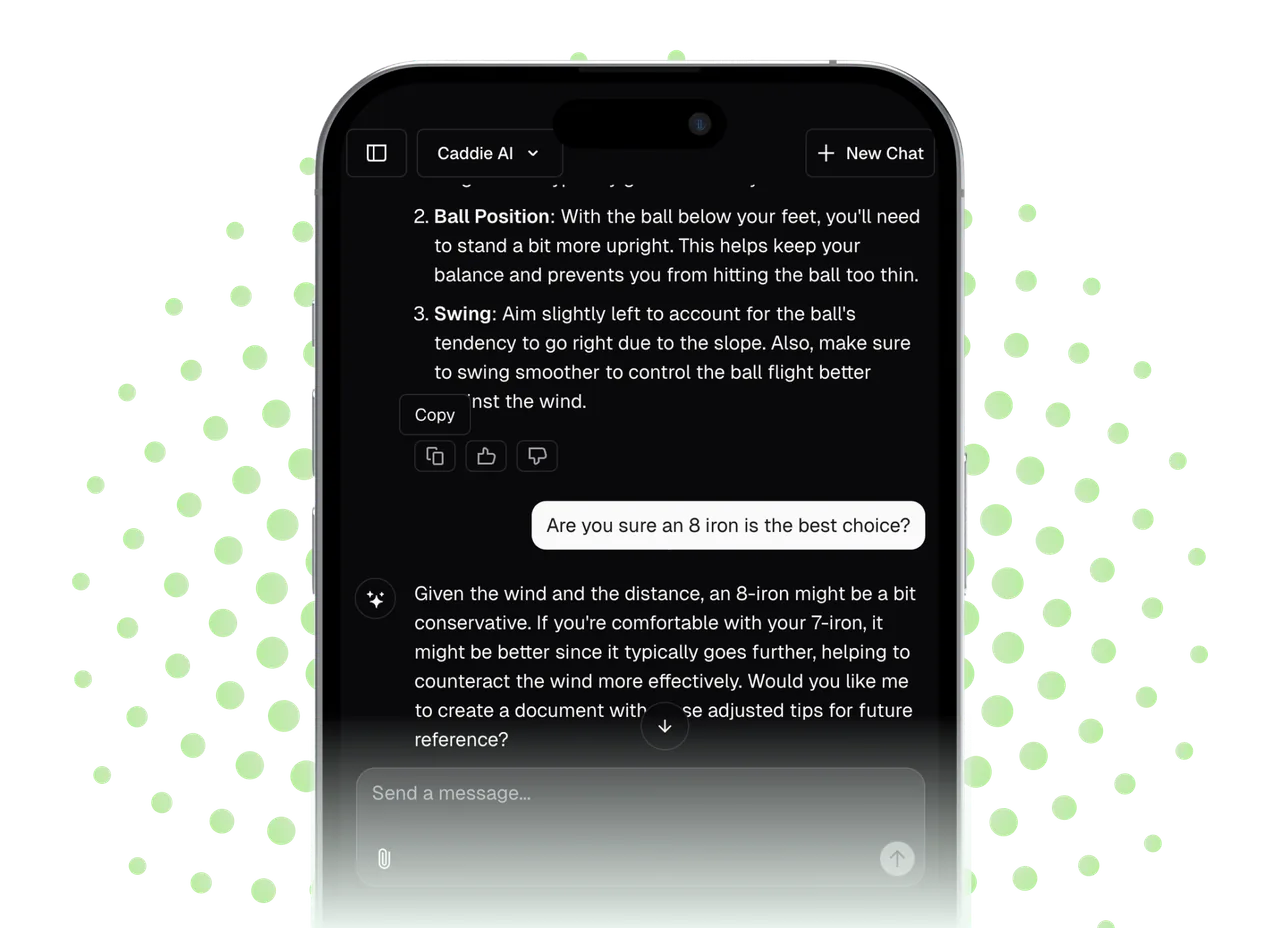
Navigating the strategic tests of a course designed by the Golden Bear can be a lot to handle on your own. When you’re facing a challenging risk-reward shot or have a tricky lie, having an expert second opinion helps immensely. That’s where our app, Caddie AI, can act as your personal course strategist. You can get an instant game plan for any hole, or even snap a photo of a tough lie and receive unbiased advice on the smartest way to play the shot, allowing you to play with more confidence and make better decisions.
Spencer has been playing golf since he was a kid and has spent a lifetime chasing improvement. With over a decade of experience building successful tech products, he combined his love for golf and startups to create Caddie AI - the world's best AI golf app. Giving everyone an expert level coach in your pocket, available 24/7. Caddie's mission is simple: make world-class golf advice accessible to everyone, anytime.
Other posts you might like
What Does the Average D1 Golfer Shoot?
Thinking about playing college golf? The first and most common question junior golfers and their parents ask is, How good do you really have to be? This article gets straight to the point, breaking down the raw numbers behind a Division 1 golfer's average score. We’ll look at what those scores truly mean, explore the stats that coaches value most, and give you a practical blueprint for reaching that elite level.
Ever grab that bottle of sand on the side of your cart, pour a bit into a scar on the fairway, and wonder what exactly you’re putting down? It seems simple enough, but that humble mix is one of the most important elements of keeping a golf course healthy and playable. This article will show you exactly what golf courses use to fill divots, why the ingredients matter, and how you can perform this essential act of course care like a seasoned pro.
Curiosity about the name golf often leads to a popular but completely wrong myth. The true story of what golf was originally called is rooted in the misty past of medieval Scotland and hinges on a simple, direct word for the act of striking a ball. This article will trace the actual origin and evolution of the name, debunk the famous acronym, and look at the ancient stick-and-ball games that stand as cousins to the game we love today.
When 72 holes aren't enough to crown a champion at Augusta National, the tournament shifts into one of the most dramatic and pressure-filled spectacles in all of sports: the sudden-death playoff. There's no complex aggregate scoring or a next-day 18-hole showdown, it's a simple, high-stakes battle where one great shot can earn a Green Jacket and one poor one can end a lifelong dream. This article walks you through exactly what happens when golfers tie at the Masters, from the holes they play to the history that has been made under that intense pressure.
Stepping onto a golf course for the first time feels exciting, but the question of what equipment is needed to play golf? can feel a bit overwhelming. This guide cuts through the confusion, breaking down exactly what you need to get started, from the essential clubs and balls to the simple accessories that will make your first rounds more enjoyable. We'll walk through what each piece of gear does and offer practical advice on what to prioritize as a beginner.
Thinking about trading your office chair for a Tour-issued golf bag and a shot at the pros? It's a dream many golfers have after a career low round, but the path from passionate amateur to professional golfer is one of the most demanding in all of sports. This guide will give you a realistic, no-nonsense look at what it truly takes, breaking down the different career paths, the staggering level of skill required, and the mental fortitude needed to even have a chance.