A skins match transforms a regular round of golf into a thrilling, hole-by-hole competition where every shot can mean the difference between winning cash and walking away empty-handed. It’s one of the most popular and exciting betting formats in the game because it rewards bold, aggressive play. This guide will walk you through exactly what a skins match is, how to set one up, the strategies you need to win, and some fun variations to try with your group.
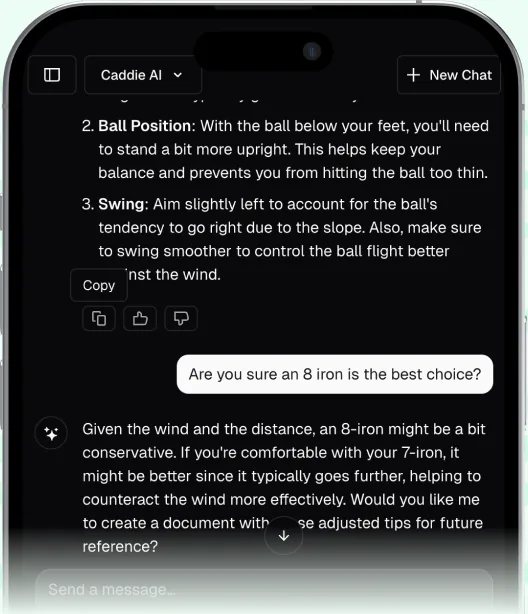
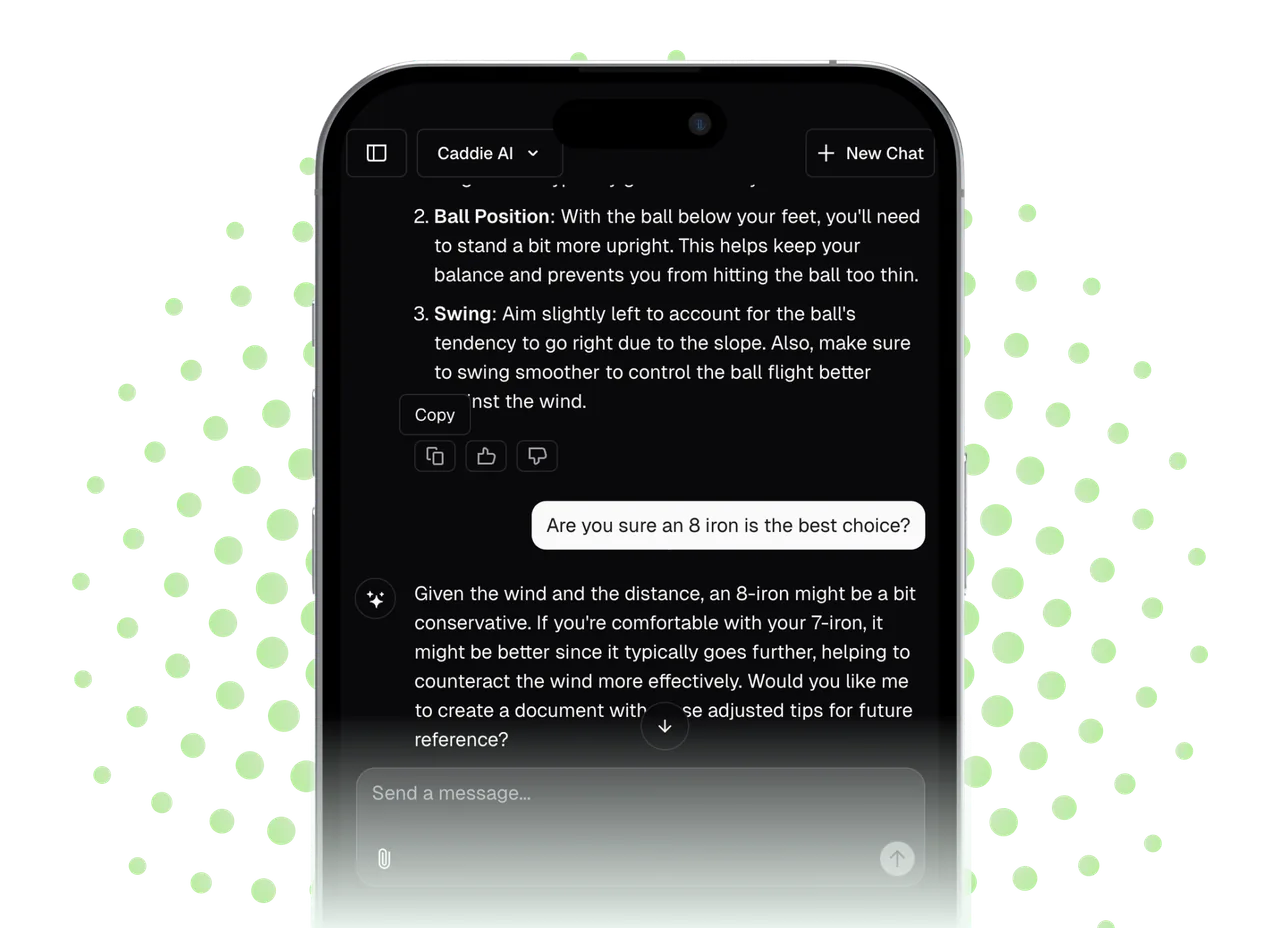
The best AI golf app: Caddie is your personal AI golf coach. Get expert-level golf advice instantly, 24/7 to help you play like a pro. Try it free →
So, What Exactly Is a Skins Match?
At its core, a skins game is a type of match play where each hole is worth a set value, known as a "skin." This value is typically a monetary amount that every player in the group agrees upon before teeing off. To win the skin for a particular hole, a player must score lower than every other player in the group. This is called winning the hole outright.
Here’s the part that makes it so much fun: if two or more players tie for the lowest score on a hole, no one wins the skin. This is called a push. When a skin pushes, its value is carried over to the next hole, adding to the pot. This process can continue hole after hole, creating a massive, pressure-packed jackpot for a single hole.
Let's walk through a quick example with a four-player group playing for $5 per skin.
Hole 1 (Par 4, worth $5):
Player A makes a 3 (Birdie)
Player B makes a 4 (Par)
Player C makes a 4 (Par)
Player D makes a 5 (Bogey)
Result: Player A wins the hole outright with the only birdie. Player A collects the $5 skin. The pot for Hole 2 resets to $5.
Hole 2 (Par 3, worth $5):
Player A makes a 3 (Par)
Player B makes a 3 (Par)
Player C makes a 4 (Bogey)
Player D makes a 3 (Par)
Result: Three players tied for the low score. This is a push. No one wins the $5. That money now carries over.
Hole 3 (Par 5, worth a total of $10): The pot is now $10 ($5 from Hole 2 plus a new $5 for Hole 3). The player who wins this hole outright will collect the entire $10. If this hole is also pushed, Hole 4 would be worth $15, and so on. As you can imagine, a few pushes in a row can make a seemingly routine par 4 feel like the 18th hole at a major tournament.
Get pro-level golf advice instantly, 24/7
Ask Caddie anything. From “what club should I use?” to “how do I play this shot?” and get instant answers.
Setting up a skins match is simple, but a few minutes of discussion on the first tee will prevent confusion later on. Here's a step-by-step process to follow.
Step 1: Agree on the Stakes
The first and most important step is to set a value that everyone in the group is comfortable with. This could be anything from $1 per hole to $20 or more, but the goal is to add excitement, not financial stress. A common setup is $5 per hole for the front nine and $10 per hole for the back nine, with the 18th hole sometimes having an even higher value (a "super skin"). For a more casual game, you might just stick with a flat $2 or $5 for all 18 holes.
Step 2: Decide on an 18th Hole Rule
What happens if the 18th hole is pushed? This happens more often than you'd think, especially if there's a large carryover pot that makes everyone play a little tight. Your group needs to decide on a rule ahead of time. Common options include:
Playoff Hole: The group heads back to the 1st tee (or a designated playoff hole) to play sudden death. The first person to win a hole outright wins all the carryover money.
Chip-Off/Putt-Off: All tied players participate in a chip-off or a long-putt contest. The closest to the pin wins the skins.
Distribute the Pot: A less dramatic but easy option. The money from the tied 18th hole is split among the winners of the previous skins. For example, if there was $30 leftover and three players had won skins earlier in the round, each would get an extra $10.
No Carryover: The simplest rule. If the 18th is a tie, that money is just never won and everyone keeps what they've already pocketed.
Step 3: Handling Handicaps (The Great Equalizer)
If your group has players with a wide range of skill levels, using handicaps is the best way to keep the game fair and competitive for everyone. Skins with handicaps are often called a "net skins" game. It works just like a regular handicap round.
Each player calculates their net score on a hole by subtracting any handicap strokes they get on that hole from their gross score (the actual number of shots they took).
Example: On the #1 handicap hole (a par 4), a 15-handicap player gets a stroke.
They shoot a gross score of 5 (bogey).
Their net score for the hole is 4 (par).
In a skins match, players compare their net scores. If a high-handicapper's net 4 ties with a scratch player's gross 4, the hole is pushed. If the high-handicapper makes a net 3 (a gross 4), and the scratch player makes a gross 4, the high-handicapper wins the skin outright. This system allows everyone to be competitive, as a well-played bogey can often win a hole.
Step 4: Keep Clear Score
Designate one person as the scorekeeper. It helps to have a dedicated column on the scorecard for skins. When a player wins a hole, write their initials and the amount won. When a hole is pushed, write a "P" or "PUSH" in the column and keep a running tally of the total carryover amount so everyone knows exactly what's at stake on the next tee box.
The Art of Skins Strategy: Playing to Win
Skins isn't just about playing good golf, it's about playing smart, timely golf. Your normal course strategy of "fairways and greens" to shoot a good total score goes out the window. Here, pars are often just enough to cause a push, but they rarely win you any money. Birdies are king.
Embrace an Aggressive Mindset
Because you must win the hole outright, you are rewarded for taking calculated risks. This is the format where you pull the driver on a tight dogleg, fly the corner to a tucked pin, or try to hole that 30-foot birdie putt instead of lagging it.
A score of 79 with one skin won can feel a lot better than a 77 that won nothing. Remember, the total score at the end of the day is meaningless. The only thing that matters is how many times you were the sole leader on the scorecard after a hole.
Know When To Attack and When To Defend
While aggression is the theme, you have to be tactical. Read the situation.
Big Carryover Pot: If three or four holes have pushed and the pot is huge, this is the time to take a major risk. Making a bogey here is no different than making a par if someone else scores a birdie. You might as well go for the win.
Last to Play: Pay attention to what your opponents have done. If you are the last to putt and someone is already in for birdie, your two-putt par is useless. You have to give that birdie putt a real run at the hole. Conversely, if everyone else is out of the hole with a bogey or worse, a simple two-putt par becomes a winning strategy. Play defense and secure the skin.
The Strategic Value of the Push
Sometimes, simply preventing an opponent from winning is a small victory. If you see someone is about to win a big pot, your goal might shift from winning the hole to just tying them. Sinking a ten-foot par putt to force a push doesn't win you money right then, but it keeps that money in play and gives you another chance to win it on the next hole. Pushing a skin denies momentum and keeps hope alive for everyone in the group.
Plan every shot like a pro
Describe your situation and Caddie AI helps you pick your target, shot shape, and club with confidence.
Once your group gets the hang of a standard skins game, you can introduce rule variations to make it even more interesting.
Validation or Syndicates: This is my personal favorite. To win a skin, not only must you win the hole outright, but at least one other player in the foursome must have a par or better on the hole. This "validates" the win and prevents someone from winning a huge five-hole carryover pot with a double bogey just because everyone else blew up with a triple. It ensures skins are won with quality golf shots.
Team Skins: Played in a two vs. two format. This is usually played as a best-ball game, where each team's best net score is compared. If one team's best score beats the other team's best score, they win the skin. A tie is a push.
Presses: This is a more complex side-bet, but can be overlaid on a skins game. If you lose a hole, you can "press" the bet, essentially starting a new, separate bet for the same stakes that runs for the rest of the match. For experienced gambling groups only!
Play Golf like a Pro with Caddie
Learn and improve your golf game as you play. Get pro-level tips, strategy and guidance anytime.
A skins match is a fantastic way to add a layer of competitive drama and excitement to any round of golf. It changes your focus from total score to winning individual moments, pushing you to hit heroic shots and rewarding you when you pull them off.
Making those decisive, aggressive shots required to win a skin comes down to confidence. When there's a big carryover on the line and you're contemplating a risky shot, having a solid strategy brings clarity and commitment. This is exactly how Caddie AI can help. By giving you immediate strategic advice for any situation on the course, from on-the-tee strategy to analyzing a tough lie, it provides you with the expert insight you need to make bold decisions and swing with complete confidence, knowing you've made the smartest play.
Spencer has been playing golf since he was a kid and has spent a lifetime chasing improvement. With over a decade of experience building successful tech products, he combined his love for golf and startups to create Caddie AI - the world's best AI golf app. Giving everyone an expert level coach in your pocket, available 24/7. Caddie's mission is simple: make world-class golf advice accessible to everyone, anytime.
Other posts you might like
What Is the P Iron in Golf?
The P iron in your golf bag stands for Pitching Wedge, and understanding its role is a game-changer for your shorter shots and scoring. This club is your primary scoring tool, the bridge between your irons and your more specialized wedges, designed for controlled, accurate shots into the green. This article breaks down exactly what a Pitching Wedge is, when to use it across different situations, and how to master it for full swings, chips, and pitches so you can lower your scores.
While arguments can be made for holes at Augusta, St. Andrews, and Pebble Beach, the title of golf’s most famous hole almost certainly belongs to the 17th at TPC Sawgrass. This deceivingly short par-3, better known as the Island Green, is a spectacle of a nerve-wracking design. This article will not only explain why this patch of grass surrounded by water captivates us every year but also give you a practical, step-by-step coaching guide you can use to conquer your own version of an island green.
A dreaded silence falls over your foursome as they stare into the bunker where your ball just landed. You walk up, heart sinking, and see it: the fried egg. This isn't just any bunker shot, your ball is half-buried in the sand, looking like a sunny-side-up egg plopped down for breakfast. This guide will walk you through exactly what a fried egg is, why it's so intimidating, and most importantly, give you a clear, step-by-step plan to escape it confidently and save your par.
In golf, PR stands for Personal Record or Personal Best. It's the best score you've ever achieved, either on a full 18-hole round, a 9-hole stretch, or for a specific statistic like fewest putts or most birdies. This article breaks down what a golf PR is, why it's a powerful tool for your game, how to track it, and how to start breaking your own records.
Seeing a score of -4 on a golf leaderboard means a player is having a great round. It’s a number that signals skill, precision, and smart play. This article will break down exactly what that means, starting with the foundation of all golf scoring - par - and guiding you through how those exciting under-par scores are calculated.
If you’ve ever felt like your putting stroke is a little unsteady, or watched in frustration as a putt rolls offline from a slight mishit, then the mallet putter might just be the tool you need. These larger, often uniquely shaped putters are becoming more popular for a reason, and they aren't just for beginners. This guide will walk you through exactly what a mallet putter is, how it compares to a traditional blade, and most importantly, how to figure out if it’s the right choice to help you sink more putts.