Figuring out the proper length for a 3 hybrid isn’t as straightforward as just grabbing the first one you see off the rack. While there are standard, off-the-shelf lengths, the right length for your game is a personal detail that can dramatically improve your consistency and ball-striking. This guide will walk you through standard 3 hybrid lengths, explain why length is so critical for performance, and show you how to zero in on the perfect fit for your swing.
The best AI golf app: Caddie is your personal AI golf coach. Get expert-level golf advice instantly, 24/7 to help you play like a pro. Try it free →
What Is a Standard 3 Hybrid Length?
When you walk into a golf shop, the 3 hybrids you see on display are built to a "standard" length. This length is a manufacturer's best guess for the average golfer. However, these standards can vary slightly between brands and depending on the shaft material.
Here’s a general breakdown of what you can expect:
Men's Standard Length (Graphite Shaft): The most common standard length for a men's 3 hybrid with a graphite shaft is typically between 40.0 and 41.0 inches. Most manufacturers land right around 40.5 inches.
Men's Standard Length (Steel Shaft): While less common in hybrids, a steel-shafted 3 hybrid is usually about a half-inch shorter than its graphite counterpart, coming in around 39.5 to 40.5 inches. The heavier steel shaft helps keep the swing weight in a playable range at a slightly shorter length.
Women's Standard Length (Graphite Shaft): Standard women's 3 hybrids are built shorter to accommodate the average female height. You'll typically find them measuring between 39.0 and 40.0 inches.
Why Club Length Is So Important for Your Hybrid Game
As a golf coach, one of the most common equipment issues I see holding players back is improper club length. It's not just about comfort, it directly impacts your ability to transfer energy efficiently and strike the ball solidly.
Think of it as a trade-off between power potential and control.
The Effect of a Longer Shaft
A longer shaft creates a wider swing arc. Physics tells us that, all else being equal, a wider arc allows the clubhead to travel a greater distance, building more speed before impact. This is why drivers are the longest clubs in your bag - they are built entirely for speed and distance.
However, that extra length comes at a cost:
Less Control: The longer the club, the harder it is to control the clubface and swing path. It's like trying to paint a detailed picture with an extra-long paintbrush - it feels less stable and precise.
Inconsistent Centeredness of Strike: Finding the absolute center of the clubface (the "sweet spot") becomes much more difficult with a longer club. More often than not, you'll see more strikes toward the toe or heel.
Poor Posture: A club that is too long will often force you to stand more upright than you should, disrupting your natural athletic posture and balance.
The Advantage of a Shorter (or Correctly-Fit) Shaft
On the opposite end, playing with a hybrid that is the correct length (which for many players may be shorter than standard) provides immense benefits that almost always lead to better scores.
Improved Control &, Accuracy: A shorter club is simply easier to manage. You’ll have a much better chance of returning the clubface to a square position at impact, leading to straighter shots.
More Solid Contact: This is the big one. Because you have more control, you are far more likely to strike the ball in the center of the face. A center-face strike with 95% of your power is always better than a toe-strike with 100% of your power. That solid contact gives you more ball speed and more predictable distance.
Better Posture and Balance: The correct length allows you to set up to the ball in a powerful, athletic position with your arms hanging naturally from your shoulders. This sets the foundation for a good golf swing.
Many golfers obsess over a few extra potential yards, but the reality is that playing a hybrid that’s a half-inch too long might cause you to miss the sweet spot, lose 15 yards of distance due to poor contact, and push the ball into the right-side trees. What good is potential distance then?
How a 3 Hybrid Fits into Your Set Progression
Your 3 hybrid doesn't exist in a vacuum, it needs to fit logically within the rest of your set. The key to a well-built bag is having consistent "gaps" between your clubs. You want each club to fly a predictable distance, with each one going slightly farther than the next one down.
Club length is the primary factor that dictates this natural distance progression. As a general rule, there’s about a half-inch (0.5") decrease in length between consecutive irons.
Here’s what a typical set progression might look like to demonstrate where the 3 hybrid fits:
Driver: ~45.5"
3-Wood: ~43.0"
5-Wood: ~42.5"
3-Hybrid:~40.5"
4-Iron: ~39.0"
5-Iron: ~38.5"
As you can see, the 3 hybrid is designed to bridge the gap between your longest fairway wood and your longest iron. If its length is off, it can cause problems:
If it's too long: Your 3 hybrid might travel nearly the same distance as your 5-wood, creating a useless "bunching" of distances and leaving you with a huge, unfillable gap between your hybrid and your 4-iron.
If it's too short: Your 3 hybrid might go basically the same distance as your 4-iron, again creating an overlap and leaving a massive gap behind your fairway woods.
Your goal is to have a "ladder" of distances, and getting the 3 hybrid length right is a fundamental step in building that ladder.
Plan every shot like a pro
Describe your situation and Caddie AI helps you pick your target, shot shape, and club with confidence.
So, if "standard" isn't necessarily right, how do you find your ideal length? The best way is through a professional club fitting, but you can also do some diagnostic work yourself.
The Custom Fitting Process
A professional club fitter will use a combination of static and dynamic measurements to dial in your length.
1. Static Measurement (Wrist-to-Floor)
This is the starting point. While you stand straight with good posture, wearing normal shoes, the fitter measures from the crease of your wrist directly down to the floor. This measurement, combined with your overall height, provides a baseline recommendation. For example, a taller golfer with proportionally short arms might need a longer-than-standard club, while a shorter golfer with long arms might need a shorter-than-standard club.
2. Dynamic Fitting (Observing Your Swing)
This is the most valuable part of the process. The fitter will put some impact tape on the face of a hybrid and watch you hit balls. Where you make contact on the face tells the real story.
Strikes consistently on the toe? This is a classic sign that the club is too long for you. Your body instinctively moves away from the club during the swing to make room, pushing the impact point out toward the toe.
Strikes consistently on the heel? This can indicate the club is too short. You might be reaching for the ball or crowding it, causing you to catch it on the inside of the face.
The fitter will also analyze your posture. Are you bent over too much? Standing too tall and reaching? Your setup tells a story about whether the club is "fitting" you or if you are trying to "fit" it.
DIY Test: Choke Down on the Grip
If you don't have immediate access to a fitter, here's a simple and effective test you can do at the driving range. Take your current 3 hybrid and do the following:
Hit 10 shots holding the club at the very top of the grip, as you normally would. Pay attention to how the strikes feel and where the ball goes.
Now, hit another 10 shots while choking down about one full inch. Grab the club lower on the grip.
What did you notice? For many amateur golfers, the results are immediate. When choking down, they often find:
The strike feels more solid and "flush."
The ball flight is straighter and more predictable.
They have a greater overall sense of control.
If this happens to you, it's a very strong indicator that your standard-length hybrid is too long for you, and you would benefit greatly from playing a shorter shaft.
Getting Your Hybrid Professionally Adjusted
If you discover that a shorter shaft is the answer, don't take a hacksaw to it in your garage! Go to a qualified club fitter or golf repair shop. They can professionally cut the shaft to your desired length.
More importantly, they can adjust the swing weight. Cutting even a half-inch off your shaft removes weight from the grip end, which makes the clubhead feel significantly lighter. This throws off the balance and rhythm of the club. A club builder can add weight back to the clubhead (using lead tape or hot melt down the hosel) to restore the proper swing weight, so the club feels balanced and powerful, not light and flimsy.
Play Golf like a Pro with Caddie
Learn and improve your golf game as you play. Get pro-level tips, strategy and guidance anytime.
To sum it up, the standard length of a men's 3 hybrid is around 40 to 41 inches, but that number is just a guideline. The ideal length really comes down to your individual height, build, and swing. Prioritizing control and solid contact with a properly-fit club is nearly always a better path to lower scores than chasing a little extra potential distance with a club that's too long.
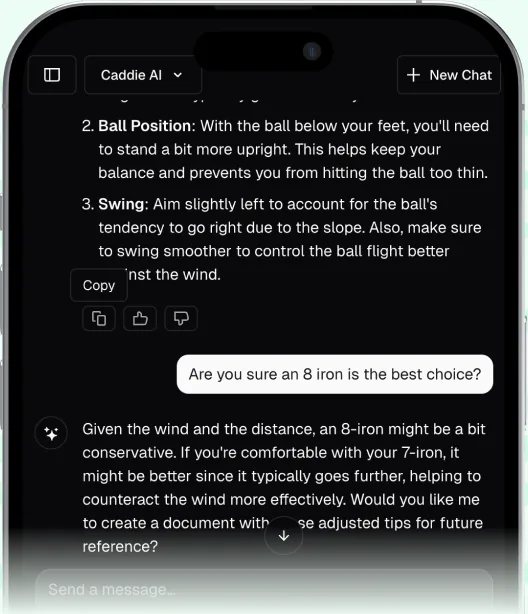
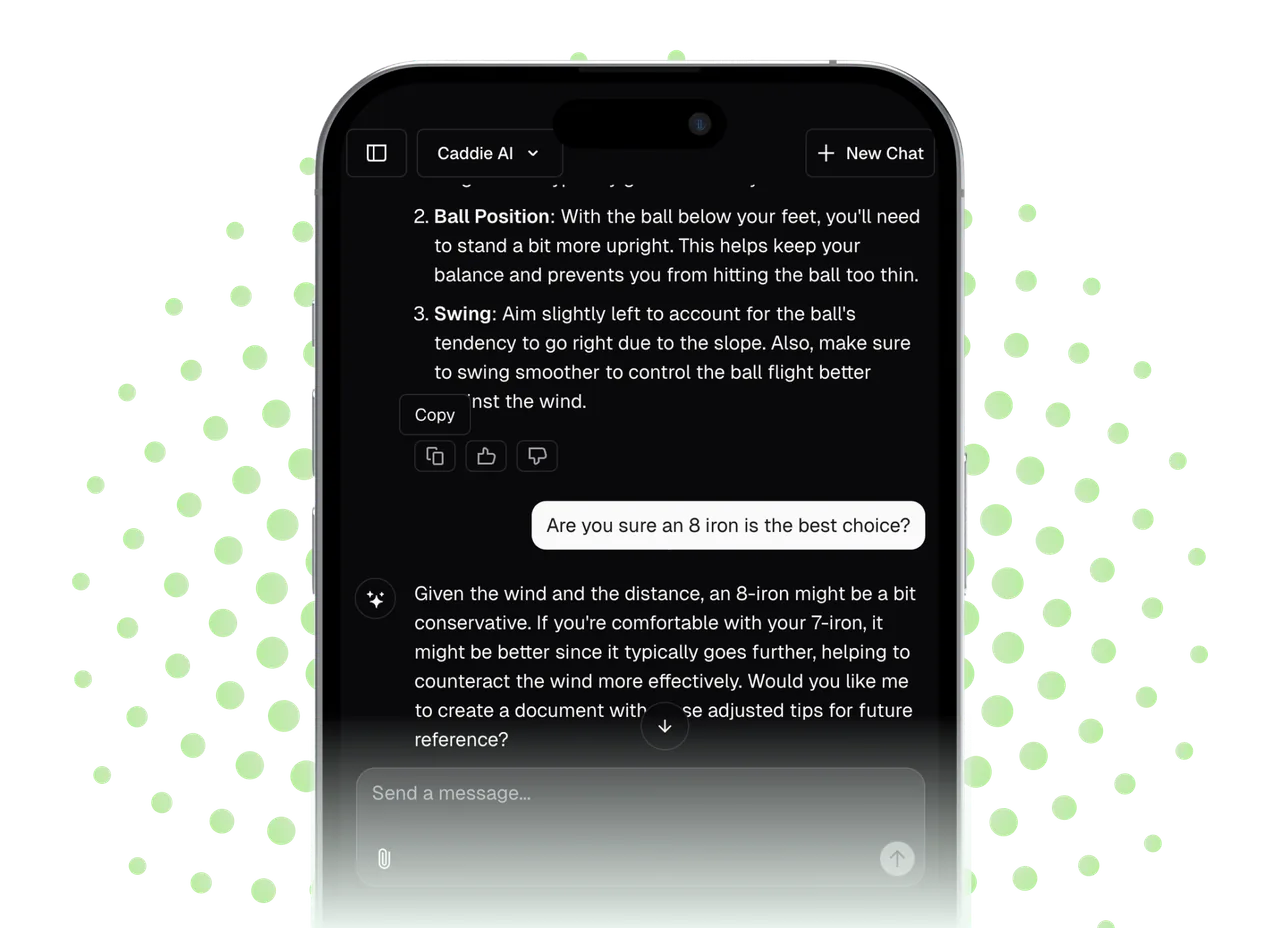
Understanding an equipment spec like club length is a fantastic first step, but applying that knowledge on the course is what really matters. When you're standing over a tough 210-yard shot, you still have to decide if the 3 hybrid is truly the right play. With my expert golf knowledge, Caddie AI can analyze the hole, consider factors like wind and trouble, and give you an instant, simple strategy. You get that Tour-level course management right in your pocket, helping you commit to every shot with absolute confidence.
Spencer has been playing golf since he was a kid and has spent a lifetime chasing improvement. With over a decade of experience building successful tech products, he combined his love for golf and startups to create Caddie AI - the world's best AI golf app. Giving everyone an expert level coach in your pocket, available 24/7. Caddie's mission is simple: make world-class golf advice accessible to everyone, anytime.
Other posts you might like
What Are the Little Books Pro Golfers Carry?
You’ve seen it a hundred times on TV: right before a big shot, a pro golfer pulls a small, weathered book from their back pocket and studies it intently with their caddie. That little book is one of the most powerful tools in professional golf, but what’s actually inside it remains a secret to most amateur players. This article pulls back the curtain on those mysterious books, explaining exactly what they are, how the best players in the world use them, and how you can use the very same strategies to play smarter and lower your scores.
Thinking about your golf game usually involves an obsession with swing mechanics and new equipment, but what you eat on the course can be just as impactful as your new driver. Fueling your body correctly is the secret to maintaining focus and physical stamina from the first tee to the 18th green. This guide will walk you through exactly what to eat - and what to avoid - before, during, and after your round to help you stop making tired swings and start finishing strong.
The cover of a golf ball is the single most important component for determining how it will perform around the green, and it has a massive impact on your feel and shot-making ability. Understanding what your golf ball cover is made of isn't just trivia, it's fundamental knowledge that can help you choose the right ball to lower your scores. This article will break down the different cover materials, explaining exactly how they affect your shots and which one is the right fit for your game.
If you've spent any time rummaging through dusty garage sale bins, inherited a set of clubs, or started playing in the '80s or '90s, you've likely come across the name Pinseeker. For a long time, these clubs were everywhere - the trusty, affordable sets that got countless golfers onto the course. And then, they seemed to vanish. This article will break down what Pinseeker was all about, why they were so popular, and what ultimately happened to this classic golf brand.
While many golfers correctly associate the term links with Scotland, the home of golf offers a rich variety of courses, each with its own name and unique playing characteristics. Knowing what these courses are called is the first step to understanding how to play them. This article will break down the different types of Scottish golf courses - from the famous coastal links to lush parklands and rugged heathlands - and give you the simple, practical tips you need to conquer them all.
Chip and Putt is a powerful and enjoyable version of golf that focuses entirely on the shots that matter most for your score: those right around the green. This guide breaks down what it is, why it's so helpful for your game, and gives you simple, actionable steps to master the basic chip and putt strokes. Let's get you feeling confident and shaving strokes off your handicap.