Pebble Beach Golf Links is located in Pebble Beach, California, a stunning coastal community on the Monterey Peninsula. This article will not only pinpoint its exact location but also act as your complete guide to the area, covering other world-class courses nearby, how to get there, and even providing some on-course strategy for its most famous holes.
The best AI golf app: Caddie is your personal AI golf coach. Get expert-level golf advice instantly, 24/7 to help you play like a pro. Try it free →
The Monterey Peninsula: California's Golf Mecca
When you ask "What part of California is Pebble Beach?", the specific answer is the Monterey Peninsula. This breathtaking stretch of coastline in Central California, about 120 miles south of San Francisco and 325 miles north of Los Angeles, is a golf paradise. It’s a place where jagged cliffs meet churning Pacific surf, ancient Cypress trees frame emerald fairways, and the cool sea air is almost always a factor in your game.
The peninsula is home to some of the most celebrated golf courses anywhere, with Pebble Beach Golf Links as its undisputed crown jewel. The entire area lives and breathes golf. It's not just a course, it's a destination. Nestled between the charming towns of Monterey to the north and Carmel-by-the-Sea to the south, Pebble Beach is an unincorporated community primarily made up of the famous 17-Mile Drive and the resort that bears its name.
So, you’re not just heading to a specific golf course, you're heading to a region synonymous with epic golf, stunning natural beauty, and a rich history that has seen the greats of the game walk its fairways.
Get pro-level golf advice instantly, 24/7
Ask Caddie anything. From “what club should I use?” to “how do I play this shot?” and get instant answers.
More Than a Single Course: Discovering Pebble Beach Resorts
One common point of confusion is thinking "Pebble Beach" is just one golf course. While Pebble Beach Golf Links is the most famous, the name actually refers to Pebble Beach Resorts, which manages four outstanding 18-hole courses and a spectacular short course. If you’re making the trip, it’s good to know all your options.
Pebble Beach Golf Links
This is "The One." The main attraction. Ranked consistently as the #1 public course in America, playing it is a bucket-list item for nearly every golfer. Famous for its cliffside holes hugging Stillwater Cove and its long history as a host of the U.S. Open, its beauty is matched only by its difficulty. The views are so distracting that they become part of the course's defense.
Spyglass Hill Golf Course
Many golf purists will tell you that Spyglass is, on balance, an even tougher test of golf than Pebble Beach. The opening five holes are a dramatic trip through coastal dunes with ocean views that rival Pebble. After the 5th green, the course turns inland and winds through the dense Del Monte Forest. It’s like playing two different courses in one round: one part coastal links, one part Augusta National. It's a stout challenge that demands every shot in your bag.
The Links at Spanish Bay
Spanish Bay offers a different but equally compelling experience. It’s an authentic Scottish links-style course, an homage to the game's roots. It runs along the rugged coastline, exposed to the elements. The fescue grasses, pot bunkers, and rolling fairways make the ground game essential. It invites creative shot-making, and as the sun sets, a lone bagpiper serenades players, making for a truly memorable finish.
Del Monte Golf Course
Opened in 1897, Del Monte is the oldest course in continuous operation west of the Mississippi. It's an inland parkland course with a classic, "old-school" feel. Characterized by tight, tree-lined fairways and small, tricky greens, it offers a more traditional American golf experience. It provides a welcome, more affordable, and quieter alternative to the other three resort courses.
The Hay
Redesigned by Tiger Woods, The Hay is a 9-hole short course that is pure fun. It’s the perfect place to warm up, settle a bet, or just enjoy the game with family. It features a stunning replica of Pebble Beach's iconic 7th hole, allowing every visitor to experience one of golf's most famous shots.
Your Guide to Getting There
Pebble Beach is relatively accessible, though it requires a bit of planning. The journey is part of the experience.
By Air
Monterey Regional Airport (MRY): This is the closest and most convenient airport, located just 20 minutes from the resort. It's a smaller airport, so flights can be more expensive, but the easy access is hard to beat.
San Jose International Airport (SJC): A great option, SJC is about a 90-minute scenic drive away. It offers far more flight options than MRY and the drive down Highway 101 and 156 is quite pleasant.
San Francisco International Airport (SFO): The largest airport in the region, SFO is about a two-hour drive north of Pebble Beach. It offers the most flights and often the best fares, and the drive down the coast along Highway 1 is one of the most beautiful in the world if you have the time.
By Car and the 17-Mile Drive
No matter which airport you fly into, you’ll be driving the last leg. The most iconic route is the 17-Mile Drive, a privately owned road that winds through Pebble Beach and the Del Monte Forest. It takes you past famous landmarks like the Lone Cypress and Restless Sea, offering turnouts for stunning photo opportunities. Access to the drive is open to the public for a fee, but this fee is often waived for resort guests or those with reservations at the courses or restaurants.
Plan every shot like a pro
Describe your situation and Caddie AI helps you pick your target, shot shape, and club with confidence.
Okay, let’s get down to the fun part. You’ve made it. You're standing on the tee. All the history, the Major championships, the pros who walked these fairways - it can be a lot. As a coach, my biggest piece of advice is to stay in the moment but have a simple, clear plan for the signature stretches.
Hole 7: The Downhill Dagger (Par 3, 106 yards)
On paper, a 100-yard shot is simple. Here, it’s one of the most intimidating shots in golf. You're high on a cliff, hitting straight down toward a tiny green surrounded by bunkers and the Pacific Ocean. The wind is the real challenge. It can howl off the ocean and completely change club selection.
Club Selection Is Everything: Don’t just look at the yardage. Toss a bit of grass in the air. Feel the wind on your cheeks. If it’s swirling or blowing hard in your face, a 100-yard shot can easily be a full pitching wedge or even a 9-iron. If it's downwind, you might be hitting a soft sand wedge. Take an extra moment to be certain of the wind.
Play to the Middle: The green is small and slopes from back to front. Forget the pin location, especially if it's on the right where the drop-off is severe. Your one and only goal should be landing the ball in the middle of that green. Take a smooth, balanced swing and trust your club. Hitting this green is a huge victory, no matter how close you are to the hole.
Hole 8: The Great Chasm (Par 4, 428 yards)
Jack Nicklaus called the second shot on this hole the single greatest shot in golf. After a well-placed drive, you face a blind, uphill approach shot over a deep ocean chasm to a small, sloping green.
Your Tee Shot Sets It Up: Don’t get greedy off the tee. The goal is to get to the right side of the fairway, around 180-200 yards from the green. This gives you the best angle and a full swing for your approach.
Trust Your Caddie and Your Line: You won’t be able to see the surface of the green. Pick a specific, small target on the cliffside beyond the green - a tree branch, a particular rock - and commit to that line. The shot plays much longer than the yardage because of the elevation. Take plenty of club. This is a moment for a confident, aggressive swing. A timid, decelerating swing is the one that comes up short in the chasm.
Hole 18: The Iconic Finisher (Par 5, 543 yards)
This is arguably the greatest finishing hole in golf. A sweeping dogleg left that hugs the cliffs of Carmel Bay for its entire length. With that iconic Cypress tree in the fairway and the waves crashing on the seawall, it’s easy to get lost in the moment. The key here is smart management.
Decide Your Strategy on the Tee: For most amateurs, this should be a three-shot hole. A good drive down the right-center of the fairway avoids the tree on the left and the ocean. From there, your next shot is a layup.
The Smart Layup: Don't just whack a mid-iron down there. Think about the final shot you want. Aim to leave yourself a preferred yardage (your favorite, full-swing wedge yardage). If you love your 100-yard shot, lay up to 100 yards. This gives you maximum confidence for the final approach into a heavily bunkered green. Going for the green in two brings in the ocean and massive risk. Unless you hit a monster drive, the smart play is to enjoy the walk and set up a birdie putt with a clinical third shot.
Play Golf like a Pro with Caddie
Learn and improve your golf game as you play. Get pro-level tips, strategy and guidance anytime.
In short, Pebble Beach Golf Links is situated on the beautiful and historic Monterey Peninsula in Central California. But the destination represents far more than just its geographic coordinates, it's a hub for some of the best links on earth and a must-see pilgrimage for anyone who loves the game of golf.
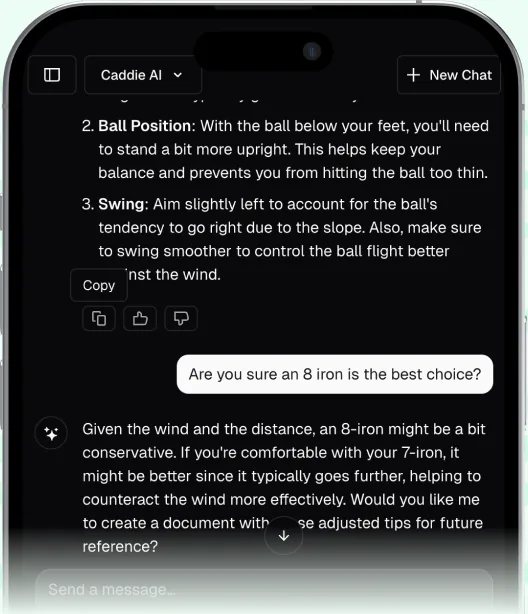
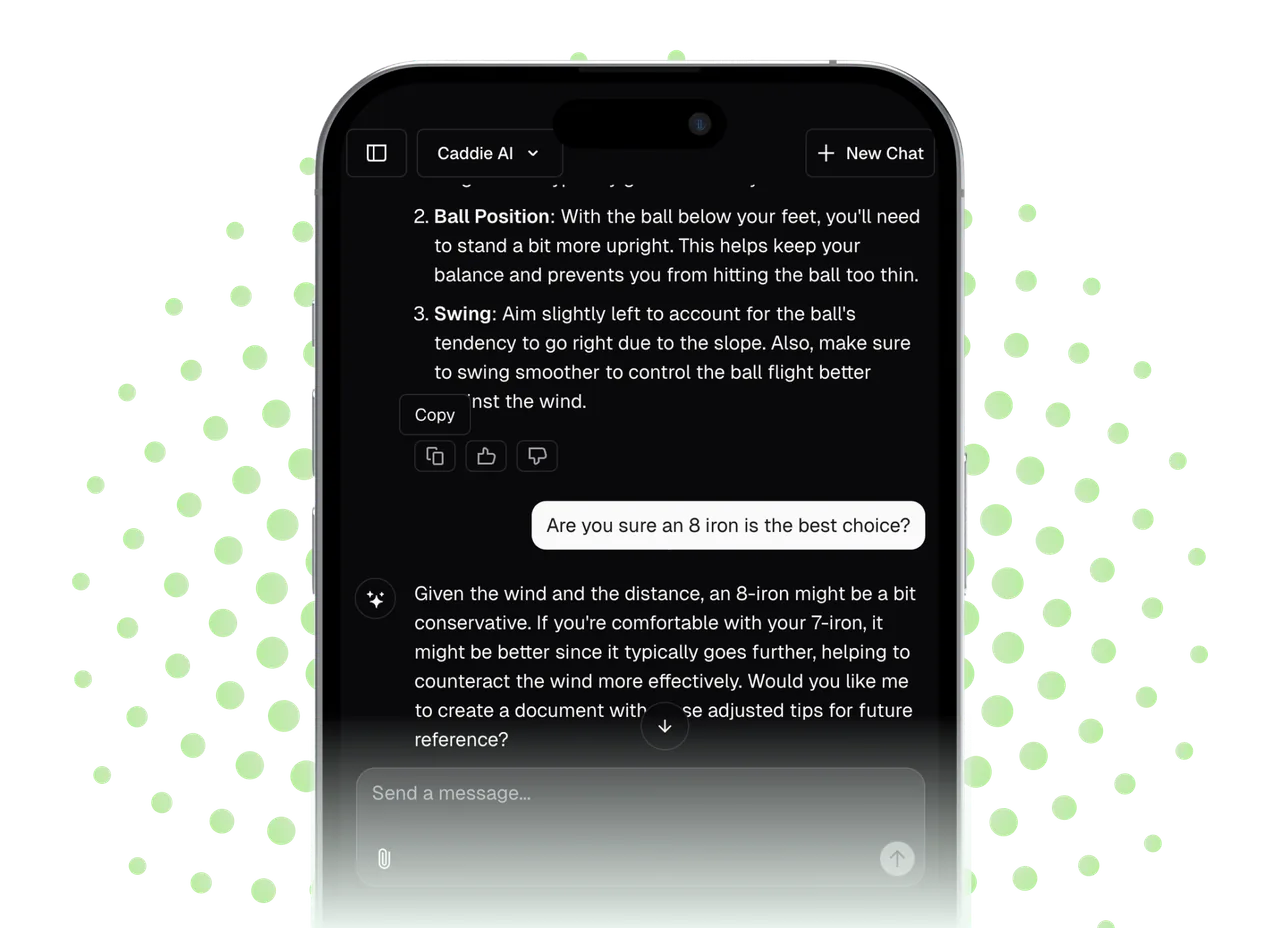
Playing a course like Pebble Beach comes with its own unique set of challenges and decisions. Our app, Caddie AI, is like having that expert caddie right in your pocket. Imagine standing on the 8th tee trying to figure out the blind approach, you could get instant, personalized strategy based on your game. When you find one of those tricky lies in the seaside rough, you can even snap a photo of the ball and get clear advice on the best way to play the shot, helping you make smart, confident decisions on a course where every stroke matters.
Spencer has been playing golf since he was a kid and has spent a lifetime chasing improvement. With over a decade of experience building successful tech products, he combined his love for golf and startups to create Caddie AI - the world's best AI golf app. Giving everyone an expert level coach in your pocket, available 24/7. Caddie's mission is simple: make world-class golf advice accessible to everyone, anytime.
Other posts you might like
What Is the Average Time to Play 9 Holes of Golf?
Curious how long it takes to play 9 holes of golf? You can generally expect a nine-hole round to take about <strong>two to two and a half hours</strong>. In this article, we’ll move beyond that simple number and cover the real-world factors that speed up or slow down your round and give you practical, coach-approved ways to play faster without feeling rushed or sacrificing your performance.
One of the first questions every golfer asks is, How far am I <em>supposed</em> to be hitting my clubs? Finding a straightforward answer can feel frustrating because it’s deeply personal. This guide will give you clear, realistic distance charts for reference, but more importantly, it will walk you through exactly how to find your own, personal yardages so you can play with more confidence and make smarter decisions on the course.
A strong golf grip has nothing to do with how hard you squeeze the club. It’s one of the most misunderstood terms in golf, but it could be the very thing that stops your slice and unlocks more consistent shots. In this guide, we'll break down exactly what a strong grip is, show you how to form one with step-by-step pictures, and help you decide if it's the right move for your game.
Augusta National Golf Club, home of the Masters Tournament, is located in the city of Augusta, Georgia. This article will not only confirm its location but also give you a complete picture of why this course is so special, from its history and iconic holes to the tips every aspiring golfer can learn from its legendary layout.
Ever hear a buddy on the range talk about getting his new driver shaft pured and just nodded along, wondering if it was some secret tour-pro level tech? You're not alone. The term gets thrown around, but few golfers understand what it really means. This guide will break down exactly what a pured golf shaft is, how the process works, and help you decide if it’s a worthwhile upgrade for your own game.
Being a scratch golfer is the gold standard for amateur players, a level of skill that commands respect on any tee box. But what does it truly mean to play to a handicap of zero? It’s not just about booming drives and draining long putts, it’s a standard of consistency, mental toughness, and strategic thinking that separates great rounds from great golfers. This guide will break down the official definition, the on-course skills, the mental game, and the practical steps that define a scratch player.