Walking up to the first tee with a jumbled, unprepared bag is a recipe for a frustrating day and can sap your confidence before you hit a single shot. Your golf bag is your command center on the course, and having it stocked with the right gear lets you focus on one thing: playing good golf. This guide will walk you through exactly what you need to carry in your bag, broken down into what’s essential, what adds comfort, and what prepares you for whatever the day might bring.
The best AI golf app: Caddie is your personal AI golf coach. Get expert-level golf advice instantly, 24/7 to help you play like a pro. Try it free →
The Core Essentials: Non-Negotiable Items
Think of this category as your starting lineup. Without these items, you technically can't play the game. Getting these right is the foundation for every round you play.
1. Your Set of Clubs (Up to 14)
Under the Rules of Golf, you're allowed to carry a maximum of 14 clubs. You don't have to carry 14, but it’s the legal limit for tournament or handicap play. For a beginner, a starter or "half" set is perfectly fine. The idea is to have clubs that can handle different distances and situations. A standard setup usually includes:
Driver: The longest club in the bag, used for hitting tee shots on Par 4s and Par 5s. Its goal is maximum distance.
Fairway Woods (or Hybrids): Usually a 3-wood and maybe a 5-wood. These are for long shots from the fairway or for tee shots on shorter Par 4s when accuracy is more important than pure distance. Many players are swapping long irons for hybrids, which are much easier to hit from various lies.
Irons: This is the heart of your bag, used for approach shots into the green. A typical set runs from a 4-iron or 5-iron up to a 9-iron and a pitching wedge. Each iron is designed to send the ball a specific distance with a predictable trajectory.
Wedges: Beyond the pitching wedge that comes with your iron set, it’s a good idea to carry a Sand Wedge (for bunkers) and maybe a Lob Wedge (for high, soft shots close to the green). These are your scoring tools inside 100 yards.
Putter: An obvious must-have. You’ll use this club more than any other, so find one that feels good in your hands and gives you confidence on the greens.
The key isn't having the most expensive clubs, but ones that feel right for you and cover your distance gaps.
2. Golf Balls
This seems obvious, but don't get caught short. You should start a round with at least six balls in your bag, and probably a full dozen if you're a newer player or playing a course with a lot of hazards. There’s nothing worse than running out of balls on the 15th hole and having to borrow one or, worse, quit the round. Don’t worry about playing a premium "pro" ball at first, find a good quality, durable ball that fits your budget and stick with it for consistency.
3. A Suitable Golf Bag
Your bag both protects your clubs and carries your gear. There are two main types:
Stand Bags: These have two legs that pop out when you set it down, keeping it upright and your clubs easily accessible. They’re lighter and designed for golfers who like to walk the course.
Cart Bags: These are larger and heavier, designed to strap onto the back of a golf cart. They offer more storage space but are cumbersome to carry.
Choose the bag that fits how you most often play.
Get pro-level golf advice instantly, 24/7
Ask Caddie anything. From “what club should I use?” to “how do I play this shot?” and get instant answers.
The Second Layer: Items for a Smooth, Comfortable Round
With the essentials covered, these items are what separate a prepared golfer from an amateur. They handle the small details of the game, making your experience smoother and showing proper golf etiquette.
1. Tees
You can't hit a driver without one. Keep a small pouch in your bag full of tees. It’s smart to have a mix of longer tees for your driver and shorter or broken tees for irons and hybrids on par 3s. Wood or plastic, it’s all preference, just don't run out.
2. Divot Repair Tool
This is a non-negotiable piece of etiquette. When your ball lands on the green, it often leaves a small indentation called a pitch mark or ball mark. Repairing it properly helps the green heal quickly. If you don't have a tool, a tee will work. Here's a quick reminder on how to use it:
Insert the tool on the outside edge of the mark.
Push the turf inward toward the center of the pitch mark from all sides.
Do not lift up from the bottom! This rips the roots and kills the grass. Just gently push inward.
Pat down the repaired mark with your putter to smooth it out.
3. Ball Marker
Marking your ball's spot on the green is essential for playing with others. A coin works perfectly, but plenty of golfers prefer the small, flat magnetic markers that clip onto a hat or a divot tool. It’s much easier to use than fumbling around in your pocket for a quarter.
4. A Golf Glove
A golf glove is worn on your top hand (left hand for right-handed players) to improve your hold on the club. It prevents the club from twisting in your hands, especially in hot weather or if you’re a player who sweats a lot. A good leather or synthetic glove provides tackiness and helps prevent blisters. Make sure it fits snugly, almost like a second skin.
5. A Towel
One of the most versatile accessories. You should have a towel with a clip that hangs from your bag. Use it to:
Wipe down your club faces to keep the grooves clean for better spin.
Clean your golf ball on the green.
Dry your hands and grips if it’s wet.
Many golfers carry two towels: one for clubs and one for hands and face.
All-Weather Ready: Preparing for Anything Nature Throws at You
A round of golf takes four to five hours, and the weather can change in an instant. Being prepared means a little rain or sun won't ruin your day.
Raingear: A lightweight, waterproof jacket and pants are lifesavers. They can be rolled up tightly and kept in a main pocket of your bag. Having a set on standby means you don’t have to cut your round short at the first sign of a drizzle.
Golf Umbrella: A good golf umbrella is larger and more wind-resistant than a standard one, designed to cover you and your bag.
Sunscreen & Lip Balm: You’re outside for several hours. Protecting your skin from the sun is smart and will prevent a nasty burn that can make you uncomfortable for days.
Hat or Visor: Keeping the sun off your face and out of your eyes helps with focus and provides extra sun protection.
Plan every shot like a pro
Describe your situation and Caddie AI helps you pick your target, shot shape, and club with confidence.
You wouldn't run a long race without water or fuel, and golf is no different. It's an athletic activity that requires mental and physical endurance.
Water: Dehydration is a huge cause of lost focus and energy on the course. Bring a reusable water bottle and fill it up whenever you pass a water cooler.
Healthy Snacks: Avoid high-sugar snacks that cause a crash. Pack things like nuts, granola bars, bananas, or apples. Eating a small snack at the turn can help you maintain your energy through the back nine.
Play Golf like a Pro with Caddie
Learn and improve your golf game as you play. Get pro-level tips, strategy and guidance anytime.
These last items aren't strictly necessary, but they show a deep level of preparation and can directly help you play smarter, more confident golf.
Rangefinder or GPS Device: Knowing the exact yardage to the pin or a hazard is powerful information. It takes the guesswork out of club selection and helps you commit to your shot. A laser rangefinder gives you a precise distance to the flagstick, while a GPS watch or handheld device provides distances to the front, middle, and back of the green.
Permanent Marker: Use a marker (like a Sharpie) to put a unique mark on your balls. This makes it easy to identify your ball and avoid hitting the wrong one, which is a two-stroke penalty.
Groove Cleaning Brush: A small wire or nylon brush is great for keeping your iron and wedge grooves free of dirt and grass, which is critical for generating spin and controlling your shots.
First-Aid Kit: A few band-aids for potential blisters, some pain reliever, and antiseptic wipes can be real lifesavers for minor issues on the course.
Final Thoughts
Stocking your golf bag this way does more than just prepare you for any situation, it builds a foundation of confidence. When you know you have every tool you need, you can clear your mind of the little worries and focus completely on the shot in front of you.
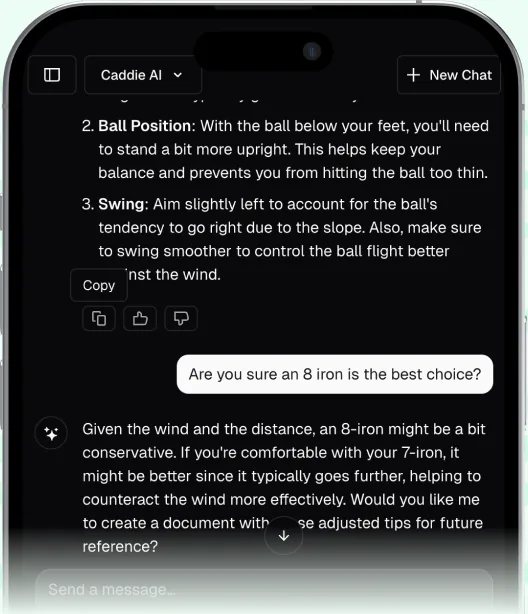
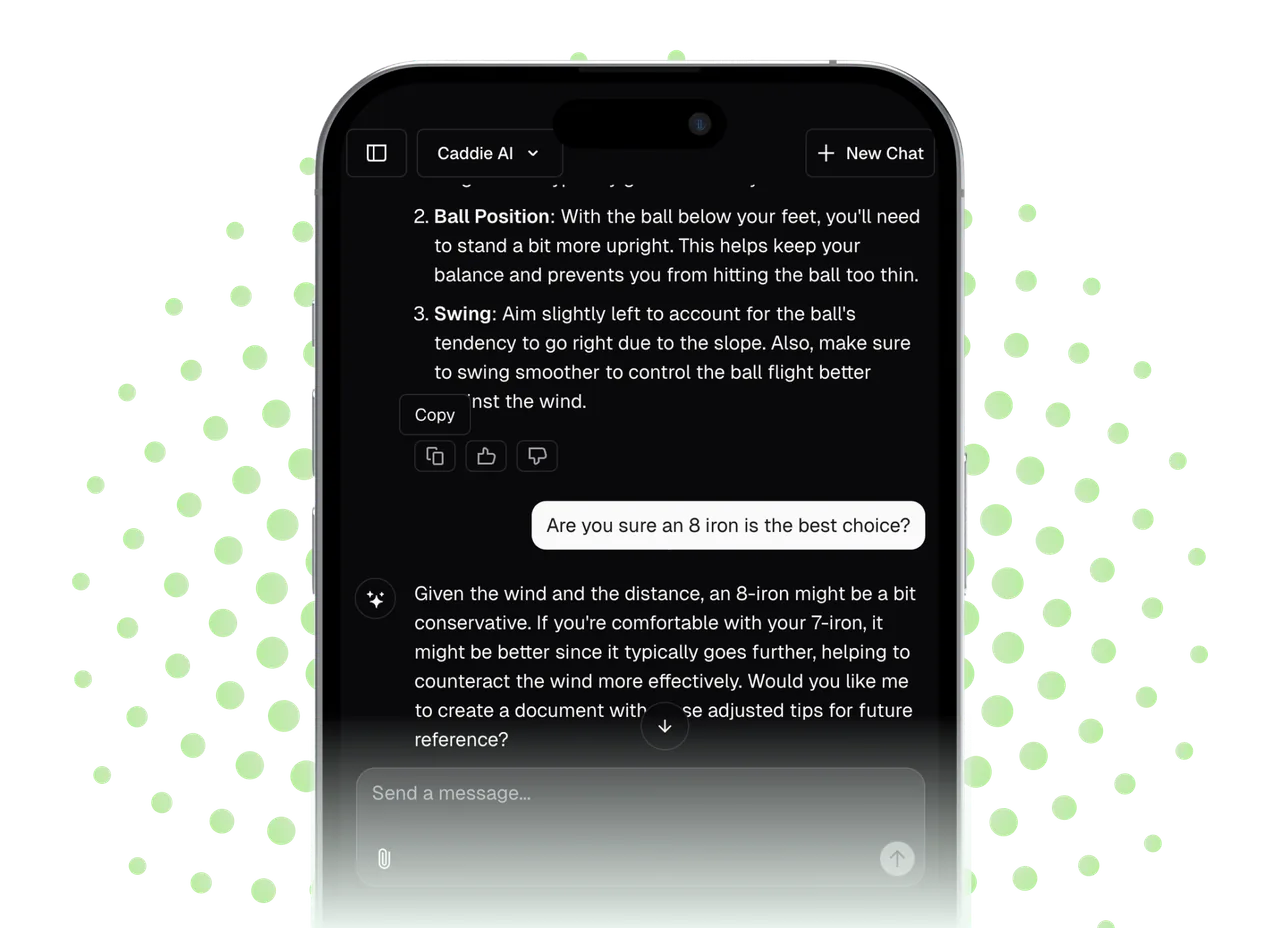
Preparation empowers you to make smarter decisions, and one of the best ways we believe to do that is by removing guesswork. That’s why we created a tool to give you a trusted opinion on every shot. For example, if you're ever stuck between clubs or facing a confusing lie, you can use Caddie AI to get a smart, simple strategy in seconds, giving you that 'pro-level' advice right when you need it most. It’s like having an expert coach in your pocket, helping you play with more confidence and enjoy the game more.
Spencer has been playing golf since he was a kid and has spent a lifetime chasing improvement. With over a decade of experience building successful tech products, he combined his love for golf and startups to create Caddie AI - the world's best AI golf app. Giving everyone an expert level coach in your pocket, available 24/7. Caddie's mission is simple: make world-class golf advice accessible to everyone, anytime.
Other posts you might like
What Are the Odds of Breaking 90 in Golf?
Breaking 90 in golf isn't about crushing tour-pro drives or hitting every green in regulation, it's a milestone of strategy, consistency, and intelligent gameplay. While it might feel like a distant dream, breaking this barrier is far more achievable than you think with the right approach. This guide will give you the statistical reality of shooting in the 80s and, more importantly, a practical step-by-step game plan to get you there.
You’ve seen it on the tournament sign-up sheet or heard it mentioned in the clubhouse: a reference to Handicap Allowance. If you thought using your handicap was as simple as subtracting it from your gross score, this term can be a bit confusing. Handicap allowance is the system that keeps competitive golf fair, and understanding how it works will give you a clearer picture of what’s happening in any partnered or team event. This guide will walk you through exactly what a handicap allowance is, why it exists, and how to apply it in the most common golf formats.
The quest for the hottest driver in golf isn't about finding one single club that outshines all others, but about discovering the driver that is perfectly hot for <em>your</em> unique swing. The newest drivers are Engineering marvels, packed with technology for distance and forgiveness, but the secret is matching that tech to your game. This guide will take you through the top contenders on the market right now, break down what makes them tick, and give you a coach’s framework for choosing the right big stick to give you more confidence on the tee.
Nothing ruins a good tee shot feeling faster than the dull thwump of a pop-up drive. One second you're coiled with power, the next the ball is launching nearly straight up, only to land a frustratingly short distance ahead. This article will break down exactly what causes that dreaded skied drive and give you clear, understandable fixes to get your ball launching out and down the fairway where it belongs.
Thinking about addressing the ball in golf? It’s simply the final, static position you take right before you start your swing. Getting your address right is the foundation for a good shot, setting the stage for everything from power to accuracy. This guide will break down every component of a solid address, giving you a simple, repeatable process to build confidence over every single shot on the course.
Every golfer dreams of hitting that perfect, dead-straight shot, but a truly great golfer learns to control the ball in all nine directions. Understanding the nine fundamental ball flights will completely change how you see the course and manage your game. This article will break down each of these nine shots, explaining what they are, what causes them, and how you can start to use them to your advantage.