The urge to play golf tomorrow morning just hit, and now you’re scrambling, wondering where you can book a tee time on such short notice. This isn’t an uncommon problem, the spontaneous desire for a round of golf is something every player understands. This guide will walk you through the most effective methods for finding and booking a last-minute round, giving you practical strategies that work, from the best online tools to some old-school tactics that a lot of golfers forget.
The best AI golf app: Caddie is your personal AI golf coach. Get expert-level golf advice instantly, 24/7 to help you play like a pro. Try it free →
Mastering Online Tee Time Services
Your first and often best stop in the hunt for a last-minute tee time is an online tee time aggregator. Platforms like GolfNow, TeeOff (by the PGA Tour), and Supreme Golf are the dominant players in this space. They partner with thousands of courses to offer a centralized marketplace for available slots, making it incredibly easy to see a wide range of options in your area with just a few taps.
Hot Deals and Last-Minute Discounts
The real advantage of these services, especially for a spur-of-the-moment round, is their dynamic pricing. Golf courses want to fill every available spot on their tee sheet. An empty slot is lost revenue. To avoid this, they offer discounts on times that are less likely to be booked, particularly as the date gets closer. This is where you can find some fantastic value.
Here’s a simple step-by-step process to find the best deals:
Step 1: Set Your Search Parameters. Open the app or website and immediately input your location and select "tomorrow" as your date. This initial filter clears out all irrelevant information.
Step 2: Use Filters to Narrow Your Options. Don't just scroll endlessly. Use the built-in filters to your advantage. You can typically sort by:
Time of Day: If you're flexible, check different time blocks. Twilight rounds (late afternoon) are almost always cheaper, and you might find a great deal on a random mid-morning slot.
Price Range: Set a maximum price you're willing to pay to avoid temptation from championship courses charging premium rates.
Number of Players: This is a big one. If you're playing as a single or a twosome, you'll have far more options than a full foursome.
Step 3: Hunt for "Hot Deals." GolfNow is famous for its "Hot Deals," but most platforms have a similar concept. These are typically prepaid, non-refundable tee times offered at a steep discount. If your plans are firm and you’re confident you’re going to play, these are the best bang for your buck. Reading the fine print is good practice, they are less flexible, but the price reflects that.
Step 4: Be Flexible With the Course. You may not get on the top-tier private-access course in your area, but you might discover a hidden gem a few miles further away. Being open to trying a new place greatly increases your chances of finding an available and affordable time.
Pro Tip: Set Up Your Profile in Advance
This is a small but hugely impactful tip. Don't wait until you find the perfect tee time to create an account. Go into these apps today and set up your profile, including your payment information. The hottest deals for tomorrow morning can get snatched up in minutes. If you’re busy typing in your credit card details while someone else is completing a one-click checkout, you're going to lose. Having your account ready to go makes the booking process seamless and fast.
Get pro-level golf advice instantly, 24/7
Ask Caddie anything. From “what club should I use?” to “how do I play this shot?” and get instant answers.
In our tech-focused world, it's easy to forget the simple power of a phone call. Calling the pro shop directly is an excellent strategy for finding last-minute tee times, and sometimes it's even more effective than the online aggregators. Pro shop staff have the absolute most current view of the tee sheet, one that online systems sometimes can't match.
Why Calling Works
You might wonder why a course would have times that aren't listed online. There are several reasons:
Member Holdbacks: Many courses, even public ones, hold a certain number of tee times for their members or regular league play. Sometimes, these times go unused and open up last minute.
Recent Cancellations: A foursome might call to cancel an 8:00 AM tee time at 7:00 PM the night before. It can take time for that cancellation to be processed and pushed to the online systems, if it gets pushed at all. The person standing in the pro shop knows that slot is open instantly.
The Power of the Single: The tee sheet is a puzzle. The pro shop staff are experts at fitting people in. They might have a group of three scheduled and would be thrilled to have you, a single, join them to make a full group. An online system rarely has the ability to make that judgment call.
Your Script for a Successful Call
Your approach matters. Be friendly, polite, and flexible. The person on the other end of the line will be much more willing to help you if you make their job easy. Here's a simple, effective script:
"Hi there, my name is [Your Name]. I know it's a bit last-minute, but I was hoping to get out and play tomorrow. Do you happen to have any availability on your tee sheet for a single (or twosome/threesome)? I’m pretty flexible on the time, just eager to play."
This accomplishes a few things. It shows you respect their time, clearly states what you need, and a key - highlights your flexibility. By saying you're flexible, you give them the power to look for any opening that might work, rather than a single specific time. It’s a small detail, but it can make all the difference.
Exploring Your Local Golf Scene
While aggregators and direct calls are your primary tactics, don't overlook an often-underutilized resource: your local city and county courses. These "munis" are the workhorses of the golf world and can be a goldmine for last-minute availability.
Check Your Municipal Course Website
Many municipal courses operate their own independent booking websites. They may not post their inventory on the major platforms because they have enough built-in demand, or they simply don’t want to pay the commission. Bookmarking the websites for your local munis is a smart move. Their booking portals are often less crowded, and you can sometimes find primetime slots that aren't advertised anywhere else.
The "Walk-On" Strategy: High-Risk, High-Reward
The final frontier of last-minute golf is the "walk-on." This means you simply show up at the course, bag in tow, and ask if there are any no-shows or openings. It feels a bit audacious, but it can work surprisingly often under the right conditions.
When it works best:
As a single, who can easily be paired with an existing group.
On weekdays, when tee sheets are generally lighter.
Very early in the morning, to catch any morning no-shows.
During slightly questionable weather, when cancellations are more likely.
This is a risky play on a sunny Saturday afternoon. Your chances are slim. But for an early Tuesday morning round as a single? It's very much in the realm of possibility. The best practice is to call the pro shop before you drive over. Just ask, "Hey, how's the sheet looking this morning? Any chance you can squeeze in a walk-on single?" They'll give you an honest answer and save you a potentially wasted trip.
Plan every shot like a pro
Describe your situation and Caddie AI helps you pick your target, shot shape, and club with confidence.
Once you’ve successfully booked your time, a new challenge appears: you’re likely playing a course you're not familiar with. Arriving five minutes before your tee time without a plan can lead to a frustrating day. A little prep can make your round infinitely more enjoyable.
Preparing for an Unfamiliar Course
Even with just a few minutes to spare, you can gather important intel. Before leaving your house, pull up the course on Google Maps and switch to the satellite view. Spend two minutes just scanning the layout. Where does water come into play? Are the fairways wide or narrow? This offers a bird's-eye preview of what's ahead. Then, find the course’s online scorecard. You'll see precise yardages and, importantly, the course rating and slope. A 72.5 rating and a 140 slope tells you to expect a very different challenge than a course rated at 68.0 with a 115 slope. It helps set realistic expectations.
On-Course Strategy: Play the Smart, Simple Shot
Playing a course blind is not the time to be a hero. Your goal should be to avoid big numbers and keep the ball in play. The core of this strategy is about being conservative and playing low-risk shots.
Aim for the center of the fairway. Don’t try to cut corners on doglegs you’ve never seen. Hidden ravines and fairway bunkers love to greet the overly aggressive golfer.
Aim for the Middle of the Green. This is perhaps the most important tip. Don't go pin-seeking. Without local knowledge, you have no idea if a pin is tucked just over a false front or next to a deep greenside bunker. Hitting the fat part of the green every time will lead to a lot of stress-free two-putts.
Club up on Par 3s. A little long is almost always better than a little short. Most of the real trouble on par 3s (water, sand) is located in front of the green. Taking one extra club gives you a margin for error.
By keeping your strategy simple, you take the guesswork out of the round and allow yourself to focus on just making a good swing, which is the most enjoyable part of the game anyway.
Play Golf like a Pro with Caddie
Learn and improve your golf game as you play. Get pro-level tips, strategy and guidance anytime.
Finding a last-minute tee time is a skill you can develop. By combining the wide reach of online aggregators with the direct-access of a simple phone call, you can almost always find a place to play. Remember to be flexible with your time and course choice, as that opens up a world of possibilities for a great, spontaneous day of golf.
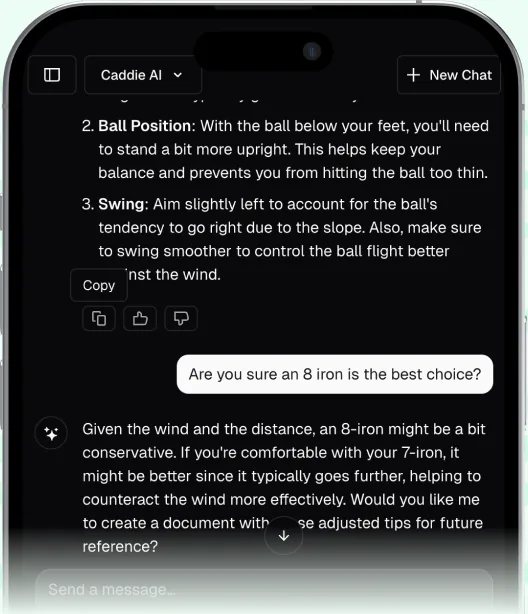
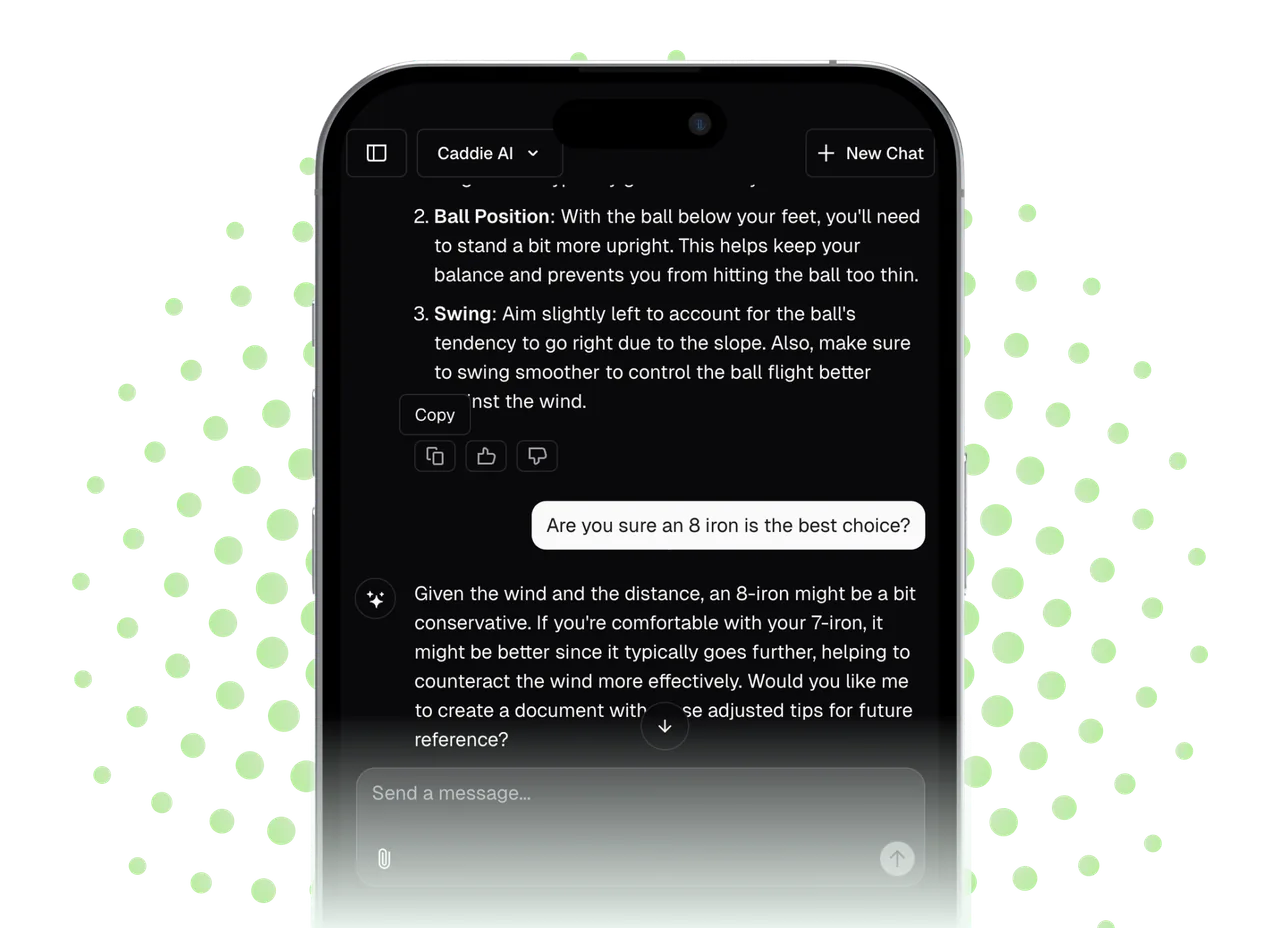
When you're standing on the tee of an unfamiliar course, having a sound strategy is everything. Our app, Caddie AI, gives you that strategy on demand. You can describe the hole and get a smart play, or even snap a photo of a tricky lie to get immediate advice on how to handle it, so you can play with confidence no matter where you tee it up.
Spencer has been playing golf since he was a kid and has spent a lifetime chasing improvement. With over a decade of experience building successful tech products, he combined his love for golf and startups to create Caddie AI - the world's best AI golf app. Giving everyone an expert level coach in your pocket, available 24/7. Caddie's mission is simple: make world-class golf advice accessible to everyone, anytime.
Other posts you might like
Can You Use a Wire Brush on Golf Clubs?
Using a wire brush on your golf clubs seems like a simple yes or no question, but the real answer is a bit more nuanced. The short answer is yes, sometimes, but it completely depends on which brush you use, which club you're cleaning, and which part of the club you're scrubbing. This guide will walk you through exactly when to reach for that wire brush, when to keep it far away from your equipment, and how to get every club in your bag perfectly clean without causing any damage.
Let's settle one of golf's most common on-course questions once and for all: Can you move the tee box markers? This article gives you a direct, no-nonsense answer based on the official Rules of Golf. We'll also cover the crucial details of what the teeing area actually is and how you can legally use this area to your strategic advantage on every single hole.
Playing golf in the cold seems impossible to some, but you absolutely can hit your clubs and enjoy a round when the temperature drops. To do it well - and avoid damaging your clubs or your body - you need to understand how the cold changes everything from your golf ball's performance to your own muscles. This guide will walk you through exactly how the cold affects your game and provide a clear action plan to play confidently all year round.
You’ve just finished the satisfying task of putting fresh, new grips on your golf clubs, and now the big question looms: when can you actually use them? This article cuts through the confusion and gives you a clear timeline, explaining exactly how long you need to wait before heading to the course. We’ll cover the solid rule of thumb, what’s happening chemically with your grips, and the factors that can speed up or slow down the process so you can swing with confidence.
Six Steps Golfers Can Follow for More Successful Putting
Sinking more putts comes down to a simple, repeatable process that removes guesswork and builds confidence. Forget everything you’ve heard about having a magic touch on the greens, consistent putting is a skill built on a solid foundation and a clear plan. This guide breaks down that plan into six straightforward, actionable steps you can start using today to lower your scores and turn putting from a source of frustration into a strength of your game.
Your golf towel is one of the most hardworking, yet overlooked, pieces of equipment in your bag. So, can you wash it? The answer is a resounding yes - you absolutely should. This guide will walk you through exactly how to wash your golf towels to keep them clean, absorbent, and ready for your next round, without causing any damage.