Trying to figure out why your work productivity suddenly dips on a random Thursday afternoon? It's probably because PGA TOUR golf is on. Understanding the rhythm of the professional golf season can feel a bit tricky, but once you get the hang of it, you’ll never be left wondering when to catch your favorite players. This guide will break down the standard PGA TOUR schedule, explain why a tournament might be on today, and show you exactly where to find the action.
The best AI golf app: Caddie is your personal AI golf coach. Get expert-level golf advice instantly, 24/7 to help you play like a pro. Try it free →
Understanding the Standard PGA TOUR Schedule
For decades, the foundation of a professional golf tournament has been built on a simple, consistent four-day format. This structure is designed to narrow a large field of competitors down to a single champion.
The Classic Thursday-Sunday Format
Nearly every standard PGA TOUR event runs from Thursday to Sunday. Here’s how it typically unfolds:
Thursday (Round 1) &, Friday (Round 2): The full field of players, usually around 144 to 156 golfers, plays one round on each of these days. Every player is fighting to make "the cut."
The Cut: After 36 holes, the field is reduced. The top 65 players (and any players tied for 65th place) move on to play the weekend. For everyone else, the tournament is over. This is a brutal but exciting part of every event.
Saturday (Round 3) &, Sunday (Round 4): The remaining players compete over the final two rounds. Saturday is often called "moving day," as players jockey for position to give themselves a chance to win on Sunday. By Sunday evening, a champion is crowned.
Morning Wave vs. Afternoon Wave
If you tune in on a Thursday or Friday, you might hear the announcers talk about playing waves. Since you can’t have 156 golfers on the course at once, the field is split into two groups. The "morning wave" tees off early in the day, while the "afternoon wave" tees off after the first group has finished. On Friday, they swap. Those who played in the morning on Thursday will play in the afternoon on Friday, and vice versa. This is done to ensure fairness, as course conditions (like wind or soft greens) can change dramatically throughout the day.
Get pro-level golf advice instantly, 24/7
Ask Caddie anything. From “what club should I use?” to “how do I play this shot?” and get instant answers.
Every week presents a different tournament with its own history, course, and prestige. While checking the PGA TOUR’s official website or app is the quickest way to see the exact tournament name and location, it's helpful to understand the different levels of events you’ll be watching throughout the season.
The Majors: Golf's Four Biggest Stages
These are the four tournaments that every pro wants to win. They define careers and create legends. They are the most-watched, most-discussed, and most prestigious events in all of golf.
The Masters Tournament (April): The only major played at the same course every year: Augusta National Golf Club in Georgia. Famous for its green jacket, pimento cheese sandwiches, and dramatic back nine on Sunday.
The PGA Championship (May): Hosted by the PGA of America, this major moves to different iconic courses across the U.S. and is often seen as a stern, fair test of all-around skill.
The U.S. Open (June): Known for being the most difficult test in an already difficult sport. The USGA sets up courses to be impossibly tough, with narrow fairways, thick rough, and lightning-fast greens, identifying the most complete player.
The Open Championship (July): The oldest golf tournament in the world. Played in the UK on traditional "links" courses, where players must battle the unpredictable elements of wind and rain along with firm, bouncy ground.
Signature Events: The Best of the Best
This is a relatively new but vital part of the schedule. Signature Events are a series of eight tournaments with huge prize money, smaller fields of elite players, and often no 36-hole cut. If you want to see all the big-name players like Scottie Scheffler, Rory McIlroy, and Jon Rahm compete against each other, these are the weeks to tune in. Events like The Genesis Invitational, the Arnold Palmer Invitational, and the Memorial Tournament fall into this category.
The FedExCup Playoffs: The Race to the Finish
At the end of the regular season in August, the top players in the FedExCup standings qualify for a three-event playoff series to determine the season-long champion.
FedEx St. Jude Championship: The top 70 players start the playoffs here.
BMW Championship: The top 50 remaining players advance to this event.
TOUR Championship: The grand finale. Only the top 30 players make it to East Lake Golf Club in Atlanta to compete for the massive FedExCup grand prize.
Why Is Golf On Outside of Thursday-Sunday?
Sometimes you’ll flip on the TV and find live golf being played on a Monday morning or discover a tournament that ends on a Saturday. This is rare, but it happens for a few specific reasons.
When Bad Weather Creates a Monday Finish
The most common reason for a tournament to extend beyond Sunday is weather. Golf is played at the mercy of Mother Nature. Thunderstorms, thick fog, or dangerously high winds can all force a suspension of play. If a long delay occurs on Saturday or Sunday, there might not be enough daylight left for all the players to complete their 72 holes. When this happens, the remaining players have to come back on Monday morning to finish. So, if you see live tournament play on a Monday, it's almost certainly because of a weather issue.
The Occasional Unconventional Schedule
A few tournaments intentionally break the Thursday-Sunday mold to attract more viewers. The Farmers Insurance Open at Torrey Pines, for example, often runs from Wednesday to Saturday. This schedule change is made to avoid competing for eyeballs with the NFL's Conference Championship games, which dominate American television on that particular Sunday.
Special, Non-TOUR Events
Every so often, you might encounter unique events that fall outside the official season. These events have their own formats (team play, match play) and schedules that don't follow the typical stroke-play model. The Ryder Cup and Presidents Cup, for example, run from Friday to Sunday but feature multiple matches happening simultaneously throughout the day, creating a very different viewing experience.
Plan every shot like a pro
Describe your situation and Caddie AI helps you pick your target, shot shape, and club with confidence.
Knowing when golf is on is only half the battle. Knowing where to watch is the other. You have more options now than ever before.
On Television
In the United States, two main media partners cover the PGA TOUR:
NBC/Golf Channel: Golf Channel is usually the home for the early rounds on Thursday and Friday. It also broadcasts the early-morning coverage on weekends before the main NBC network takes over for the primetime afternoon window when the leaders are finishing.
CBS: Much like NBC, CBS handles the marquee weekend coverage for many of the biggest events on the TOUR calendar, including The Masters and the PGA Championship. Their broadcast typically picks up in the mid-afternoon on Saturday and Sunday.
Streaming Online
For die-hard fans who don't want to miss a shot, streaming is the way to go.
PGA TOUR LIVE on ESPN+: This is the most comprehensive option. For a subscription fee, ESPN+ gives you access to multiple streams all day long. You can often choose between a main feed, a marquee group (following a popular pairing), featured groups, and feeds that focus solely on specific featured holes (usually exciting par-3s).
Peacock Premium and Paramount+: If a tournament is on NBC or CBS, you can typically stream their network coverage live through their respective streaming apps, Peacock and Paramount+. This is a great way to watch on the go if you have a subscription.
By understanding this basic structure, you can stay on top of the golf world and be ready to enjoy the action, whether it's a routine Thursday opening round or a weather-delayed Monday battle for a major championship.
Play Golf like a Pro with Caddie
Learn and improve your golf game as you play. Get pro-level tips, strategy and guidance anytime.
Knowing the PGA TOUR's schedule, from its standard Thursday-Sunday format to weather-delayed Monday finishes, helps you follow your favorite players all season long. With a little understanding of a tournament's status - be it a Major, a Signature Event, or a Playoff battle - you can always be ready for the day's action.
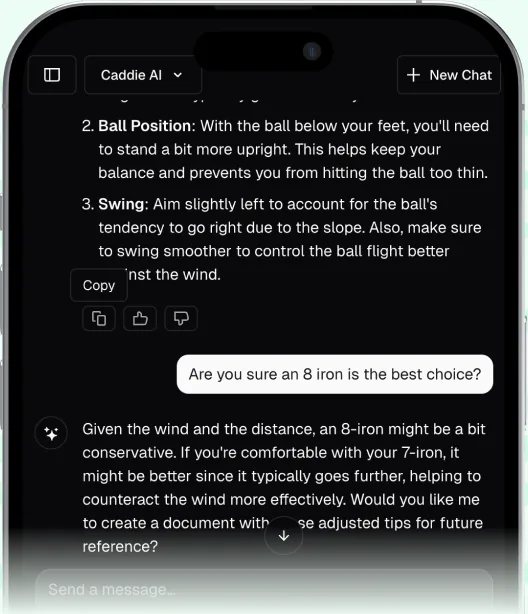
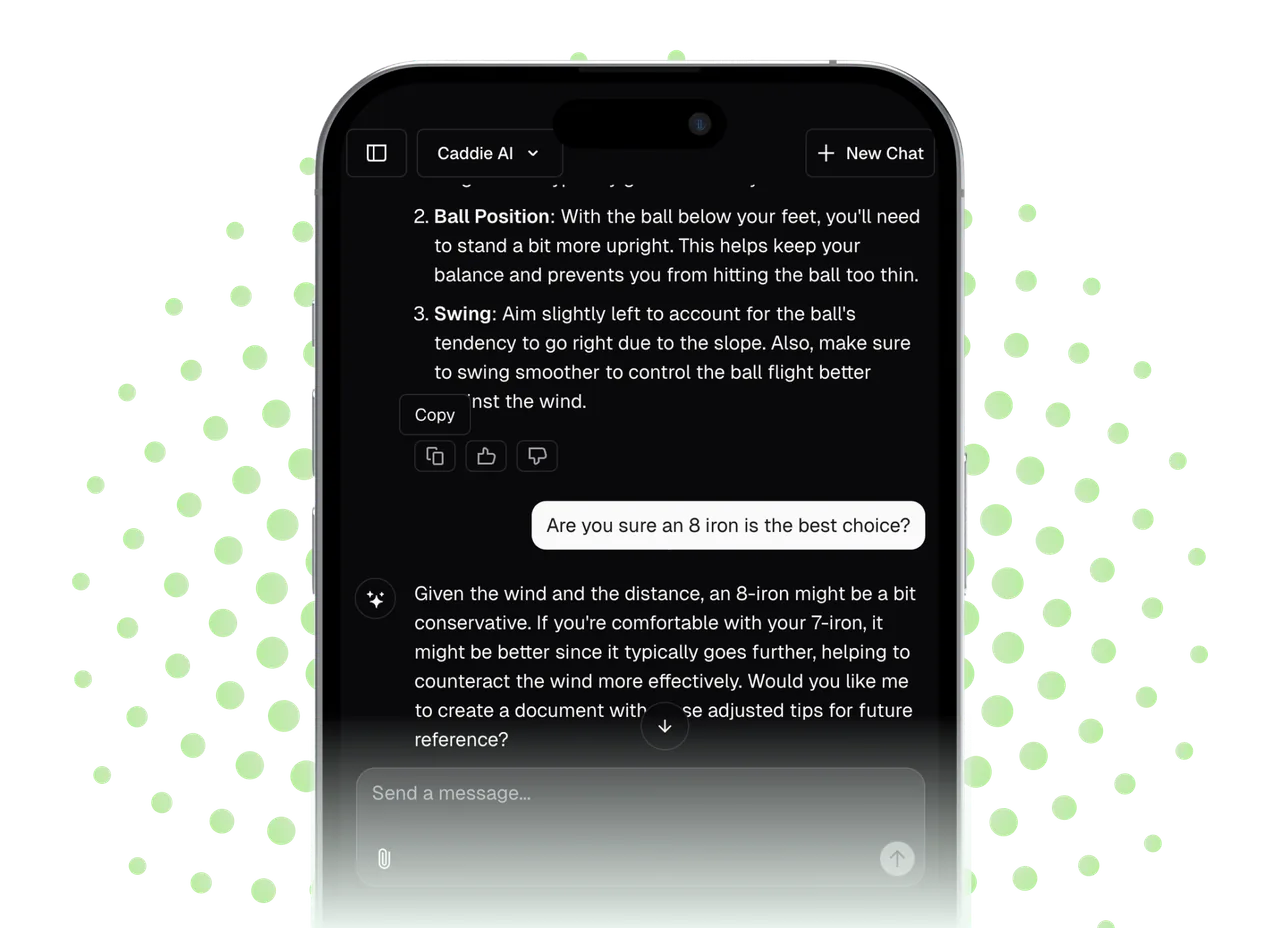
Watching the best players in the world can inspire you to improve your own game, but it often brings up questions about strategy and decision-making. That's where we wanted to help. With Caddie AI, you can get instant advice on your own course management, just like a pro would. If you're wondering how to play that tricky dogleg on your home course, or you've found yourself in a tough lie and need a smart play, our app can analyze the situation - even with a photo - and give you clear guidance so you can play with more confidence.
Spencer has been playing golf since he was a kid and has spent a lifetime chasing improvement. With over a decade of experience building successful tech products, he combined his love for golf and startups to create Caddie AI - the world's best AI golf app. Giving everyone an expert level coach in your pocket, available 24/7. Caddie's mission is simple: make world-class golf advice accessible to everyone, anytime.
Other posts you might like
Why Do You Put Lead Tape on a Golf Club?
Ever notice those little metallic strips stuck to a Tour pro’s driver or irons? That’s lead tape, and it’s one of the most accessible and effective tools for customizing your golf clubs right at home. This isn't some complex, pro-only trick, it's a straightforward way to fine-tune your equipment to match your swing. This article will show you exactly what lead tape does, where to place it to shape your shots, and how to start experimenting so you can get more out of your clubs.
Nothing sours a great day on the course faster than stepping up to the tee box, dreaming of the perfect drive, and then watching helplessly as your driver skims the top of the golf ball, producing a weak grounder that barely makes it past the ladies' tees. We've all been there, and the frustration is real. This article breaks down the most common reasons you’re topping the golf ball with your driver and provides clear, actionable steps and drills to help you start making solid, powerful contact.
That powerless, high-flying ‘pop-up’ off the tee is one of the most frustrating shots in golf. One second you’re expecting a monstrous drive, and the next you have a dreaded sky mark on the crown of your driver and a ball that goes higher than it goes forward. This article will break down the exact reasons this happens and equip you with simple, actionable drills to banish the skied drive from your game for good.
Seeing those sand-filled bottles on the side of every golf cart, or the tidy boxes on tee grounds, isn't just for decoration. They contain a specific 'divot mix,' and using it is a fundamental part of playing the game responsibly. This article will show you exactly what's in that mix, why it's so important to use it, and how to fill your divots like a seasoned professional.
You’ve seen them on TV. A tour pro stands over a delicate chip, their wedge looking less like a high-tech piece of equipment and more like something they dug up in their backyard. It's brown, it's blotchy, it's rusted. This leads to one of golf's most persistent questions: why do golfers intentionally let their most precise instruments turn to rust? This article will break down the myths, explain the real performance benefits, and show you exactly how you can get that popular tour-proven look yourself.
Why Do Golf Players Follow Through on Their Swing with a Golf Club?
Ever watched a professional golfer hold that balanced, effortless pose after a powerful swing and wondered if it's just for the cameras? The truth is, that classic finish isn't for show at all. The follow-through is one of the most misunderstood yet important parts of the entire golf swing, and improving yours can unlock unexpected gains in distance, accuracy, and consistency. This article will break down exactly why you should follow through and give you practical advice to build a better finish, starting today.