Becoming a consistent bogey golfer is one of the most rewarding milestones in the game, and it has almost nothing to do with perfecting your swing. It’s about letting go of the hunt for perfect shots and embracing a smarter, less stressful way to play. This guide will walk you through the practical strategies and mental shifts you need to consistently shoot in the 90s and finally feel in control on the golf course.
The best AI golf app: Caddie is your personal AI golf coach. Get expert-level golf advice instantly, 24/7 to help you play like a pro. Try it free →
What is "Bogey Golf," Really?
Bogey golf means you average one shot over par on every hole, which adds up to a score of 90 on a par-72 course. For many golfers stuck in the land of 100+, this goal seems far off. But the truth is: you don’t need perfect swings to get a consistent round in the 90s. You don’t need to drive the ball 300 yards. And you definitely don’t need to aim for every pin.
The path to becoming a bogey golfer is paved with good decisions, not perfect swings. It’s about understanding your limitations, playing high-percentage shots, and most importantly, avoiding the "blow-up" holes that ruin your scorecard. Let’s break down exactly how you do it.
Get pro-level golf advice instantly, 24/7
Ask Caddie anything. From “what club should I use?” to “how do I play this shot?” and get instant answers.
The first and most important step is a mental one. You have to change your definition of a “good” hole. Most amateurs watch the pros on TV and think they need to make birdies and heroic pars. This mindset leads to aggressive plays, risky shots, and the dreaded "other" on the scorecard (a triple bogey or worse).
A bogey golfer’s mindset is different. For you, bogey is your new par. When you step onto a par-4 tee box, your mission isn't to make a 4, it's to make a 5. A par is a fantastic bonus. A bogey is a successful outcome. This simple shift takes all the pressure off. Suddenly, you don't need to hit a perfect drive, a laser-like iron, and a single putt. You have an extra shot to work with on every single hole. This mental cushion is the foundation of consistency.
Your Goal: Score 5 on par 4s, 4 on par 3s, and 6 on par 5s. Anything better is a win.
Your Mantra: “Avoid the big number at all costs.”
The Golden Rule: Erase Double Bogey from Your Game
Let's do some simple math. If you want to shoot 90, you have 18 bogeys to "spend." Making a few extra bogeys here and there is perfectly fine. What you can’t afford is the double bogey or the triple bogey. One triple bogey (an 8 on a par 5) requires three pars somewhere else just to get back on track for a 90. That's a huge mountain to climb.
From now on, your primary focus on every hole is avoiding a score of double bogey or worse. This one rule will guide every decision you make, from club selection off the tee to whether you try for that hero shot out of the trees.
How to Avoid the Blow-Up Hole: A Simple System
When you find trouble, your one and only goal is to get the ball back into a playable position. Ego out, smarts in.
In the trees? Don’t look for the miraculous 1-in-100 shot through the tiny gap. Take your medicine. Punch out sideways into the fairway, even if it means going backwards a little. A five-foot punch shot that leaves you with a clear look for your next shot is infinitely better than ringing another tree and staying in jail.
In a fairway bunker? Forget the green. Your objective is to get out with a clean strike. That often means taking more loft (like a 9-iron or pitching wedge instead of a 7-iron) to ensure you clear the lip. Aim for the widest part of the fairway.
In thick rough? The ball might not fly as far and the club can twist at impact. Choke down on your club, take a stronger grip, and swing smoothly. Trying to muscle it out often leads to a chunk that goes nowhere. Accept that you’ll lose distance and just focus on advancing the ball.
Plan every shot like a pro
Describe your situation and Caddie AI helps you pick your target, shot shape, and club with confidence.
Playing “boring” golf means having a repeatable, low-risk plan for getting the ball from the tee box to the green. This isn't about raw power, it's about intelligent placement.
Step 1: The Tee Shot – Find Your "Fairway Finder"
Your driver might be the most fun club in your bag, but it's also probably the source of your worst mistakes. You do not need to hit driver on every par 4 and 5. In fact, you probably shouldn't.
Your goal off the tee is to put the ball in play, giving you a reasonable chance at your next shot. Hitting it 250 yards into the woods is a disaster. Hitting it 180 yards into the middle of the fairway is a perfect start to a bogey hole.
Go to the driving range and find a club you can consistently hit straight more easily than your driver. For most golfers, this is a 5-wood, a hybrid, or even a 5-iron. This club is your new best friend - your "fairway finder." On tight holes, or on holes with water or bunkers, leave the driver in the bag and use your trusty fairway finder. Trading 20-30 yards of distance for a near-guaranteed spot in the fairway is one of the smartest bargains in golf.
Step 2: The Approach Shot – Forget the Flag
Here's a truth that feels strange at first: you should almost never aim at the flag.
Pros can aim at flags because they have incredible distance control and a predictable shot shape. You, the aspiring bogey golfer, do not. When you aim for a flag tucked in a corner and miss, you leave yourself short-sided in a bunker or deep rough. That's how bogeys turn into doubles.
From now on, your target on every approach shot is the absolute center of the green. This is your largest possible target. If you pull it slightly, you’re on the left side of the green. If you push it slightly, you’re on the right side. If you are a little bit long, you may be on the edge instead of being too long. Your "misses" are now safe. You might have a longer putt, but you're putting, not chipping from jail.
For club selection, choose the club that gets you to the back of the green on a solid strike, not the club that you have to hit absolutely perfectly to get there. Taking one extra club and swinging smoothly is a much more reliable strategy than trying to force a lesser club.
Play Golf like a Pro with Caddie
Learn and improve your golf game as you play. Get pro-level tips, strategy and guidance anytime.
Even with great course management, you're going to miss greens. That's fine! The bogey golfer's secret weapon is turning "missed green in regulation" into an easy bogey with a simple, two-step short game plan.
Step 1: The Only Chip You Need to Master
Forget the high, soft, spinning flop shot you see on TV. It's a low-percentage shot that requires perfect turf and tons of practice. Your go-to shot around the green should be the safest and simplest in golf: the bump-and-run.
Think of it as simply a putt with a more lofted club. Here's how it works:
Select Your Club: an 8-iron or 9-iron is perfect.
Set Up Like a Putter: Take a narrow stance, place the ball in the middle, and put more weight on your front foot (about 60%). Choke down on the grip.
Use a Putting Stroke: Rock your shoulders back and through with very little wrist action. The goal is to "bump" the ball just onto the green and let it "run" out to the hole like a putt.
This shot is incredibly forgiving. If you hit it a little bit heavy, it still moves towards your target. Hit it slightly thin, it flies a little further and then rolls. It takes the big miss out of play. Practice this one shot until it’s second nature. It's all you truly need to get the ball on the putting surface from anywhere up to 20 yards off the green.
Step 2: The Art of the Stress-Free Two-Putt
Three-putting is a silent scorecard killer. You avoid them not by trying to make every long putt, but by getting your first putt very close.
Your new goal for any putt outside of 15 feet is _not_ to make it. Your goal is to get it inside an imaginary three-foot circle around the hole - the "Circle of Trust."
When you take the pressure off making the putt, your stroke becomes much smoother. You focus on speed and line, and your distance control will improve wildly. Lagging the ball into that Circle of Trust leaves you with a simple, pressure-free tap-in. The three-putt - and the frustration that comes with it - will begin to fade from your game.
Accepting a two-putt bogey after missing the green is classic bogey golf. It’s smart, it’s stress-free, and it keeps disastrous numbers off your card.
Final Thoughts
The journey to bogey golf is a game of strategy, not perfection. It’s about managing your misses, avoiding round-killing penalty strokes, and playing high-percentage shots from tee to green. Embrace course management as your primary skill, simplify your shot selection, and learn to love the humble yet effective bogey.
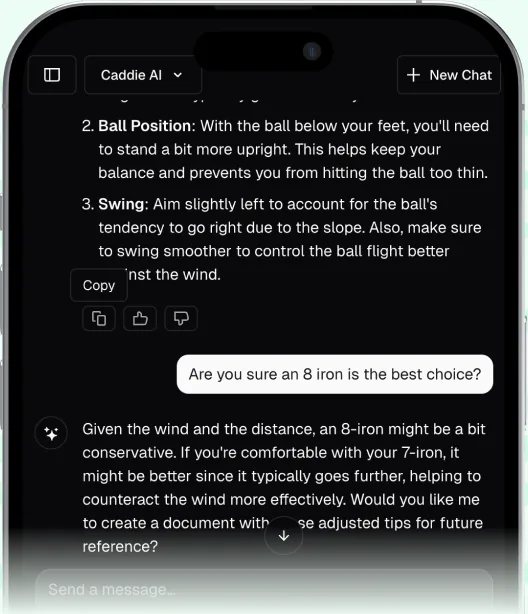
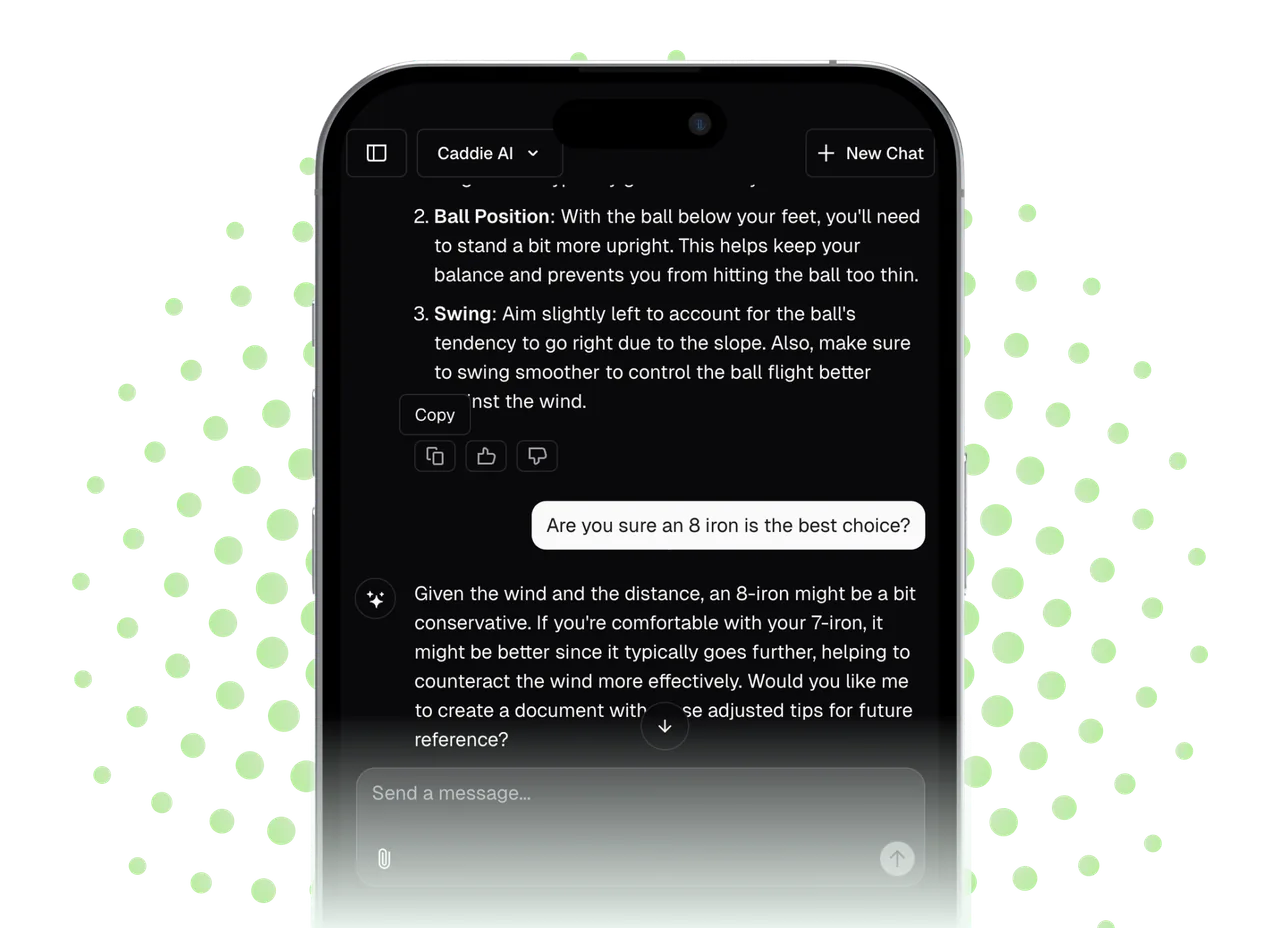
To help execute this on the course, we built Caddie AI to act as your personal course strategist right in your pocket. Instead of guessing, you can get a simple game plan for any hole or ask for a club recommendation based on a smart target. If you find yourself in a tricky lie, you can even take a photo to get instant advice on the best way to play it, helping you turn those potential double bogeys into simple, stress-free escapes.
Spencer has been playing golf since he was a kid and has spent a lifetime chasing improvement. With over a decade of experience building successful tech products, he combined his love for golf and startups to create Caddie AI - the world's best AI golf app. Giving everyone an expert level coach in your pocket, available 24/7. Caddie's mission is simple: make world-class golf advice accessible to everyone, anytime.
Other posts you might like
How to Attend a Golf Tournament
Watching professional golf in person is an entirely different game than what you see on TV, offering a chance to see the best players on earth up close. To get the most out of the experience, however, a little preparation goes a long way. This guide will walk you through everything you need to know, from buying your tickets and packing your bag to navigating the course and understanding spectator etiquette like a seasoned veteran.
You’ve seen it on broadcasts and with the best players at your club: a smooth, powerful swing where the club seems to just fall perfectly into place before impact. This position, often called the slot, is one of the most significant separators between high-handicap golfers and consistent ball strikers. Getting into the slot isn't about strength, it's about sequence and position. This guide will break down what the slot is, why it matters, and provide simple, actionable steps and drills to help you feel it for yourself and unlock your most powerful, reliable swing.
Choosing a new putter from a wall of hundreds can feel completely overwhelming. It’s the one club you use on every single hole, yet finding the right one seems like a dark art. This guide will walk you through the essential factors, step by step, so you can confidently pick a putter that is genuinely built to improve your game and help you make more putts.
Getting your hands to work correctly in the golf swing is one of the most powerful, yet widely misunderstood, parts of the game. So many golfers either try to consciously force their hands to turn over or, conversely, try to hold them completely rigid through impact. Both approaches zap power and create nasty hooks or slices. The truth is, proper hand and forearm rotation - often called the release - is a natural and smooth action that squares the clubface for that flush, powerful, and straight contact we all crave. This guide will break down exactly what your hands should be doing, when they should be doing it, and give you some simple, actionable drills to finally nail the feeling.
A dropping thermometer doesn't have to mean hanging up your clubs for the season. With the right preparation and gear, playing golf in the cold can be just as enjoyable as a perfect summer day, and often more rewarding. This guide is your complete game plan for staying warm on the golf course, covering everything from the foundational basics of what to wear to the on-course strategies that will keep you comfortable and playing your best. We’ll show you how to properly layer your clothing, protect your hands and feet, and even adjust your pre-round routine to beat the cold.
Learning how to pick up your golf ball with the back of your mallet putter is more than just a back-saving hack, it’s a small move that makes you look and feel like a seasoned player. This article will break down exactly how to master this subtle skill, with clear, step-by-step instructions tailored to different types of mallet putters. You’ll be scooping your ball off the green with casual confidence in no time.