Offering a genuine compliment on the golf course is one of the easiest ways to be a great playing partner, but moving beyond a simple nice shot can be tricky. When you know what to look for, you can give specific, encouraging praise that not only boosts your friend's confidence but also deepens your own understanding of the game. This guide will walk you through exactly how to compliment a golf swing, focusing on the details that show you're an observant and supportive golfer.
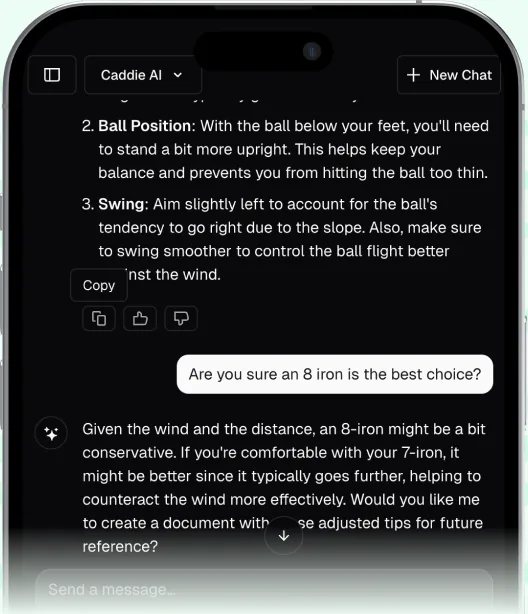
The best AI golf app: Caddie is your personal AI golf coach. Get expert-level golf advice instantly, 24/7 to help you play like a pro. Try it free →
Why a Good Compliment Matters on the Course
Golf is a deeply mental game. A single, well-timed, genuine compliment can have a surprising impact on a player's mindset. It’s not about flattery, it's about acknowledging the hard work and artistry that go into a complex athletic motion. When a fellow golfer is struggling, hearing "that was a perfect swing, just some rotten luck" instead of silence can be the difference between a fuming walk to the next shot and a confident, relaxed one.
Furthermore, learning to see what makes a swing effective is a skill in itself. By training your eye to spot good tempo, balance, or a smooth transition in others, you’re indirectly coaching yourself. You begin to internalize what "good" looks and feels like, making it easier to diagnose your own faults and build a more consistent swing for yourself. In short, giving better compliments is a win-win: it elevates the dynamic of your group and sharpens your own golf IQ.
Get pro-level golf advice instantly, 24/7
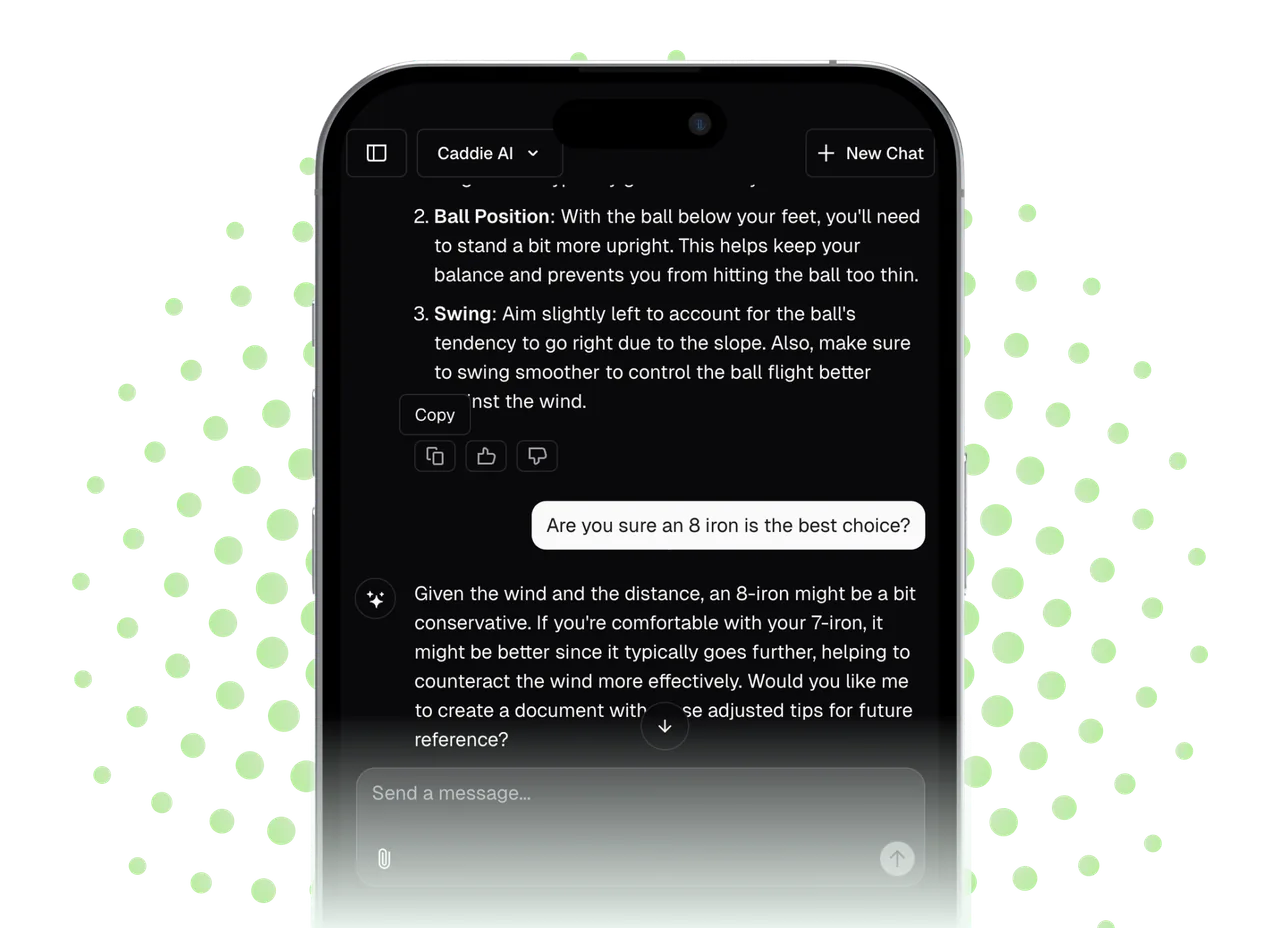
Ask Caddie anything. From “what club should I use?” to “how do I play this shot?” and get instant answers.
Move Beyond "Nice Shot!" by Focusing on the Process
The most common compliment in golf is also the most fleeting: "nice shot." It's tied directly to the result. If the ball lands in a great spot, it was a "nice shot." If the exact same swing produces a bad bounce into a bunker, the comment disappears. This is where you can stand out as a great playing partner. Start complimenting the process–not just the outcome.
Praise Tempo and Rhythm
Tempo is the "holy grail" for most amateur golfers. It's the overall timing and speed of the swing, from takeaway to finish. A swing with good tempo looks unhurried, graceful, and deceptively powerful. Because so many golfers struggle with rushing their swing, especially from the top, complimenting someone's tempo is one of the highest forms of praise you can offer.
Instead of: "Good swing."
Try: "Your tempo is so smooth today. It looks effortless."
Instead of: "You killed that."
Try: "Man, that rhythm is fantastic. You never look rushed."
You don't have to wait for a perfect result to offer this. If your partner hits one a bit thin but their tempo was buttery smooth, acknowledge it. "I love that rhythm, you'll hit a thousand great shots with that tempo." This reinforces the right feeling, which is far more valuable than the result of a single shot.
Comment on Balance and Finish
A golfer's finishing position is a tell-tale sign of how balanced their swing was. A player who holds their finish, with their weight on their front foot and their chest facing the target, has likely committed to the shot and rotated through correctly. This is another area where many amateurs struggle, often falling backward or losing their balance.
Instead of: "Good one!"
Try: "I love how you hold that finish. So balanced and powerful."
After a long iron or wood: "You look so balanced over that shot, right from setup through the finish."
A "picture-perfect" finish is something golfers work hard to achieve. Acknowledging it shows you recognize the athleticism and technique required to swing an iron at 80 mph and end in a completely stable position.
The Sound of a Pure Strike
Sometimes, the best compliment has nothing to do with what you see, but what you hear. A well-struck iron shot makes a distinct, compressed "thump-click" sound that is music to any golfer's ears. It’s a sound of pure contact that everyone is chasing.
Instead of: "You hit that well."
Try: "Wow, that sounded amazing. Absolutely flushed."
This is a fantastic compliment because it’s irrefutable. Even if the ball took an unlucky hop, the purity of the strike remains a fact. It tells the player that they did their part perfectly - the rest was just golf.
Level Up: Complimenting Specific Parts of the Swing
If you're playing with golfers who you know are working on their game, you can get slightly more specific. A well-placed 'coach's eye' compliment can be extremely encouraging. The key is to keep it positive and observational, never prescriptive.
On the Setup and Takeaway
A good swing starts before the club even moves. A balanced, athletic setup is the foundation. Meanwhile, a smooth 'one-piece' takeaway - where the hands, arms, and torso start the swing together - sets the entire sequence in motion correctly.
"You look really athletic and comfortable over the ball."
"Your takeaway is so smooth. Everything moves together perfectly."
On the Transition
The transition is the moment a golfer completes their backswing and begins the downswing. A smooth, unhurried transition is the mark of an advanced player and the source of incredible power. It's the opposite of the rushed, 'over-the-top' move that plagues so many slicers.
"That transition at the top is so smooth. Money."
"The way you start your downswing is never jerky. That's a tour-level move."
On Extension and Release
Watch a great player after they make contact. You'll see their arms fully extend out toward the target, a sign that they've released all the power of the club into the back of the ball. This is another area that separates skilled strikers from hackers.
"You really stay through that shot. Great extension."
"Man, you fire those hands right through the ball. You don’t hold anything back."
Plan every shot like a pro
Describe your situation and Caddie AI helps you pick your target, shot shape, and club with confidence.
The "Don'ts": How to Avoid Sounding Like an Annoying Coach
Giving compliments is an art, and it's easy to get it wrong. The golden rule is to be supportive, not a swing doctor. Here are the things to avoid at all costs.
DON'T Give a Compliment with an Asterisk
This is the most common mistake. It’s the praise that comes with a piece of unsolicited advice attached. It’s not a compliment, it’s a criticism disguised as one, and it's almost never welcome.
The Wrong Way: "Great swing! If you could just finish a little higher, it'd be perfect."
The Wrong Way: "Nice contact. Your alignment was a little off, but the swing looked good."
If they didn't ask for a lesson, don't give one. Stick to what was good, period.
DON'T Overdo It
Compliments are like salt - a little goes a long way. If you're praising every single shot, your words lose their meaning and start to sound insincere. Save your praise for the swings that really impress you. One thoughtful, genuine compliment per round carries more weight than ten generic ones.
DON'T Be Disingenuous
Don't just say things to say them. If your partner tops a drive 50 yards, telling them "great tempo on that one" is going to come across as sarcastic or clueless. Wait for a moment when the action truly merits praise. Authenticity is everything.
DON'T Force a Technical Comment
Unless you're playing with your swing coach or a serious student of the game who you know well, it's often best to stick to compliments about tempo, balance, and the sound of the shot. These are less technical and more focused on the overall athletic feel of the motion. A compliment on someone’s "shaft plane" or "wrist angle" could land awkwardly with a casual player.
Play Golf like a Pro with Caddie
Learn and improve your golf game as you play. Get pro-level tips, strategy and guidance anytime.
Becoming someone who gives great golf compliments is about learning to appreciate the process, not just the results. A specific, thoughtful comment on a golfer's tempo, balance, or the pure sound of their strike is far more meaningful than another "nice shot," and will mark you as a knowledgeable and supportive playing partner.
Understanding the nuances of the golf swing makes the game more rewarding, both to play and to watch. We built Caddie to be your personal golf expert for just this reason. Whether you want a better understanding of what 'tempo' or 'transition' really means, get a solid strategy for a tough hole, or even have me analyze a photo of your ball in a tricky lie, it's there for you 24/7. It takes the guesswork out of golf so you can focus on hitting great shots and enjoying the game with your friends.
Spencer has been playing golf since he was a kid and has spent a lifetime chasing improvement. With over a decade of experience building successful tech products, he combined his love for golf and startups to create Caddie AI - the world's best AI golf app. Giving everyone an expert level coach in your pocket, available 24/7. Caddie's mission is simple: make world-class golf advice accessible to everyone, anytime.
Other posts you might like
How to Use Game Golf
So, you’ve picked up a Game Golf system, and you’re ready to see what's really going on inside your golf game. Fantastic. This article will be your friendly guide, walking you through everything from the initial setup to using it on the course and, most importantly, how to make sense of all that valuable data you're about to collect.
Moving pressure correctly in your golf swing is the hidden engine that generates effortless power and shot-stopping consistency. Getting this sequence right separates crisp, compressed iron shots from thin or fat ones and powerful drives from weak slices. This guide will give you a clear, step-by-step understanding of how to sequence your pressure shift, complete with drills you can use today to feel the proper movement and groove a more powerful swing.
That weak, frustrating slice that starts right and curves even further right is one of golf’s most common ailments, and it almost always comes from one single issue: an open clubface at impact. Your intentions are good, but when the face of the club head is pointing right of your target line the moment it meets the ball, a slice is the only possible outcome. This article provides a clear, step-by-step guide to diagnose why your clubface is open and gives you proven, actionable drills to get it squared up, start hitting draws, and finally gain the power and consistency you’ve been looking for.
Putting a fresh Super Stroke grip on your putter is one of the simplest and most effective changes you can make to your game. It provides an instant upgrade in feel and control, helping you quiet your hands and make a more confident stroke. This guide provides a complete, step-by-step walkthrough to get you from that old, worn-out grip to a perfectly installed Super Stroke right in your own workspace. We’ll cover everything you need, from gathering your tools to the final alignment that sets you up for success on the greens.
Dreaming of teeing it up on a perfectly manicured, exclusive golf course is a common fantasy for golfers, but it doesn't have to remain a fantasy. The Augusta azaleas, the seaside cliffs of Cypress Point, or even just the pristine fairways of the top private club in your city can feel impossibly out of reach. This guide breaks down the real, practical ways you can earn yourself a tee time at these coveted courses. We’ll cover the proven strategies, from networking the right way to finding the back doors that open through charity and club programs.
A powerful, effortless golf swing doesn't come from muscling the ball, it comes from releasing the clubhead correctly. This an often misunderstood concept in golf, but getting it right is the difference between weak slices and pure, compressed strikes that fly down the fairway. This guide will clarify what a proper release truly is, show you the common faults that prevent it, and give you practical drills to start feeling it in your own swing.